China Yangtze.com

China Yangtze River Information: cruises, maps, pictures, ships, three gorges dam.

Author: jessica (page 9 of 72)

Canggu Nunnery

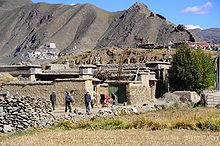
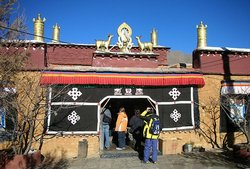
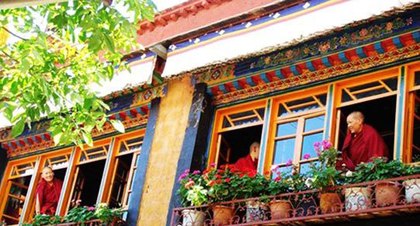
Situated around Barkhor Street is the charming Changqu nunnery. As the only nunnery in Lhasa, Cangqu nunnery is an excellent place for nuns and local girls to learn about Buddhism. This nunnery has delivered famous influential Buddhist figures. One of them is Samding Dojepamo Deqenquzhen.

The place is relatively small. It consists of 2 areas. One is for ceremonial activities while the other is for daily activities. Even so, a humble and terrific nunnery I would say. For the place that is so neatly ordered, and for the kind smiles in every nuns’ face. Almost 100 nuns are staying there at present. Cangqu nunnery is known as public nunnery. Chants and prayers are recited every morning. The largest chants are held monthly.

Canggu Nunnery

Canggu Nunnery

The significant feature of Cangqu nunnery is its underground cave with a statue of Srongtsen Gampo. The well known Buddhist is believed to have been using the cave for meditation and studies. No wonder that since hundred years ago, many pilgrims from Tibet comes to pray here. 3 nuns come everyday for chanting prayers and taking care of the cave.

Cangqu nunnery shall be proud that it can manage to handle the funds on its own. It doesn’t depend on the state for maintenance and living. Instead, the nunnery even has started some entities that successfully raise some funds for the nuns as well as nunnery’s maintenance.

Not only that, Cangqu nunnery runs clinic as well. The clinic is handled by medical professionals assisted by nuns who pose some medical knowledge. It has served the locals for years.

Visiting cangqu nunnery shall not be complete without having a sip of ‘Qia A Mao’ tea. It is a special tea made of milk, black tea, and sugar. Another treat here is Tibetan noodles and steamed buns made by nuns. The tea house is run by the nunnery. It is located in the road with its own small garden inside. Many visitors passing from Barkhor Street will spend a little time to rest in the tea house and do some prayers in the nunnery.


Sera Monastery

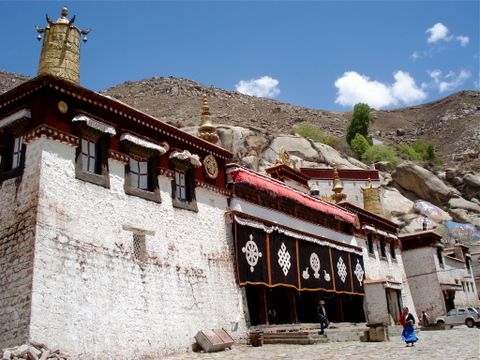
Sera Monastery is an outstanding Monastery of Tatipu Hill in Lhasa city. The name ‘sera’ is derived from Tibetan language which means ‘wild rose’. The story has it that when the monastery was built, the back hill of monastery was full of bloomed roses. That is why it is called so.

Sera Monastery

Sera Monastery

The great Sera monastery is 28 acres big. Its three main parts are Kamcum (dormitory), Coqen Hall, and Zhacang College. What makes the three buildings special is the artistic value in it. From fine statues, unparalleled murals, scriptures made of gold powder, up to scent cloth are significant values of these consructions. Sera is distinctive, compared from other monasteries for it is the place where debates regarding Buddhist doctrines is held.

The dormitories, Kamcun, are the place where the monks dine and rest. Kamcun has a total thirty three dormitories of different sizes surrounding a central yard. The division of Kamcun is based on the monks’ original place.

Coqen Hall is the main assembly hall in Sera monastery. Various religious rituals are held here. The hall has 125 pillars that dispersed in 0.5 acre area. Five chapels in the hall are as salute for Maitreya, Sakyamuni, Tsong Khapa, Arhats, and Kwan-yin. Not only that, the greatest possession of Sera monastery is the Gangyur of Tripitaka that reach 105 volumes out of 108 original volumes. The priceless holy books were a gift by a Ming Dinasty Emperor, Chengzu.

Sera Monestery

Sera Monastery

Zhacang College is the main destination for the monks who want to learn about Buddhist classis. The college is divided into three, Je zhacang, Ngaba zhacang, and Me zhacang. The smallest as well as the newest one is Ngaba zhacang is preserved as prayer site for Jamchen Choey, the founder. The oldest one, Me zhacang now functions as preserved fresco.

The best time to visit Sera monastery is during the Sera Bengqin festival. It is a religious festival of transferring blessings of Buddha to the monks. The festival is leaded by Dalai Lama. The festival takes place on December 27, Tibetan calendar. It comes around the month of February, Gregorian calendar. Another time is around Shoton festival which comes on August. During the festivals, a great opportunity is open for locals and tourist to worship Buddha.


Potala Palace

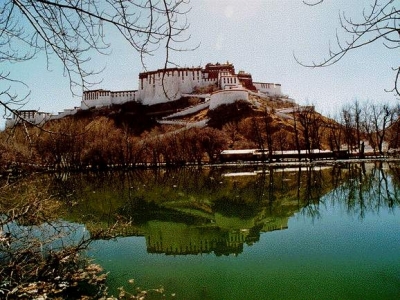
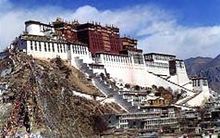
It is high, it is amazing, it is heaven, and it is Potala Palace. Standing beautifully in the central of Lhasa, Potala palace is one ancient palace reaching the sky for its extreme height 12,359 ft. Potala is a Sanskrit word that means “Abode of Buddha Avalokitesvara”. The name is actually inspired by a holy hill in South India.

Not only the name, but the structure of Potala palace is as well beautiful. It is divided into 2 parts, the Red palace in center and the White palace in both wings.

Potala Palace

Potala Palace

Potrang Marpo, another name of the Red palace is located in the highest center of the palace. As the name, Red palace is painted fully red as representation of power and stateliness. It functions as a place for prayers and religious study. Apart from that, the Red palace has several halls, libraries, and chapels that are connected by galleries and passages. The biggest hall is Great West Hall surrounded by three chapels. The hall is painted beautifully with murals throughout the inner walls. After that, the Saint’s chapel and the Dharma cave are two constructions left from 7th century.

Potala Palace

Potala Palace

The White Palace, known as Potrang Karpo, is considered as symbol of peace and quiet. Once, the palace functions as office of local government of Tibet also as a residential for Dalai Lama. Located in the 4th floor of the White palace is the Great East Hall. It is reserved for special purpose such as religious events and political functions. Up in the 5th and 6th floors are residential and offices of politicians. While the top one, 7th floor, is dwelling of Dalai Lama. It consists of two, the West Chamber of Sunshine and the East Chamber of Sunshine due to plenty of sunshine.


As a tourism place, Potala Palace values more than refreshment. It is a treasure. Over 300 years, the Palace has been carrying cultures and traditional arts such as stupas, rare sutras, murals, and statues.

.


Xitang Water Town

Another historic water town in China is Xitang. It is located in Jiashan County, Jiaxing City. In the past, the town was an important place around the boundary of the Yue and Wu states.

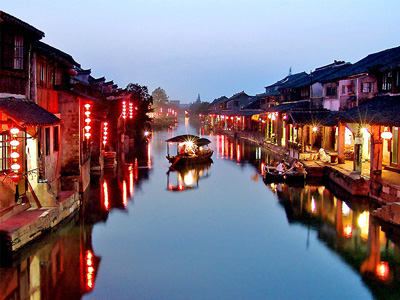
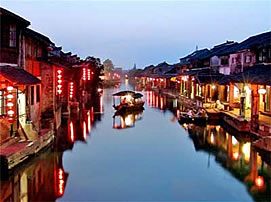
Fantastic place of Xitang makes everyone amazed. Be it the locals or tourists, they are struck with amazement and admiration of the place. Alike a fairyland, Xitang water town is a quiet and natural place with dazzling clear blue water running alongside. Dauntless bridges, shiny sunset, and glittering lights in the evening draws an outstanding picture of life.

Xitang Water Town

Xitang Water Town

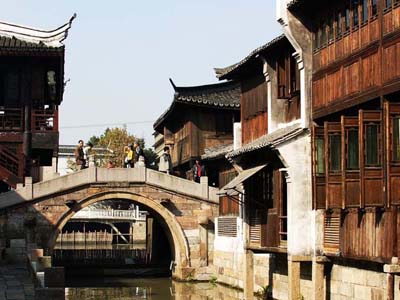
Xitang is filled with buildings of Ming and Qing Dinasty with great artistic value. The most notable features of the buildings are covered corridors, bridges, and lanes.

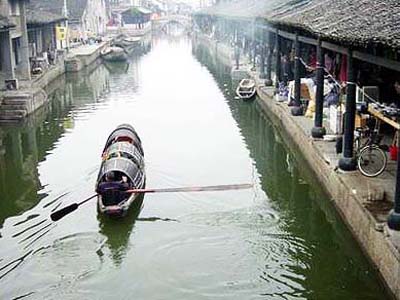
The covered corridor along Xitang water town may be the one and only fascinating of the whole Yangtze river. Hence, it distinguishes Xitang from the other water towns in China. Stands in a row, over 1,000 meters long covered corridors are indeed attractive. One part of the corridor is carved beautifully with decorative artistic patterns. Leaving an elegant mark that result in visitors’ praise.These corridors are not just for display. They are as well being shelter to hide from the sun and rain. The other side of the covered corridor that is alongside the river is meant for the visitors passing by as a resting place. Live up the memory of living in the past by walking along the Xitang covered corridors.

Xitang Water Town

Xitang Water Town

The bridges are the heart of Xitang water town. They are inseparable. Not only because they connect each part of the town, but it is beautifully made in such a way that it forms an artistic value. Talks regarding the bridges are still spreading among the locals, that the creation is definitely a masterpiece.

After Bridges and covered corridor, one significant symbol of Xitang water town is lanes. All can be found here. The lanes used to be the main connectors of the town in the past. It is unique. Wherever you start, the lanes shall deliver you to any place in the town just like a rope.

Tongli Water Town

Fushi, the original name of Tongli water town, is a historic water township located on the east of Taihu Lake. The place is just 18 kilometers away from Suzhou city. Being populated by over 33 thousand, Tongli has been very well preserved as a beautiful water town. The place is just right to enjoy a marvelous holiday while experiencing the traditional culture.

Tongli Water Town

Tongli Water Town

Tongli water town exists beautifully. There are seven islands surrounded by five lakes and fifteen rivers connected by forty nine bridges. Each bridge that delivers into different parts of Tongli town has its own unique name. The names are inspired by the natural living of the locals. Most well known are Ternate bridges that consist of Taiping bridge (means Peance and Tranquility), Changqing bridge (means Lasting Celebration), and Jili bridge (means Luck). For the inhabitants, Ternate bridges are not just distinctive tourism bridges. It is more of a fortune symbol. Walking by the bridges is believed to welcome good luck during birthday and wedding parties. Another two notable bridges in Tongli are Siben, the oldest one, and Dubu, the smallest one (5 feet long). Tongli bridges stand strong and still as silent witness of the town’s historical memory.

Tongli Water Town

Tongli Water Town

Tongli town holds the reputation as Museum of Ancient Architectures. Most of the ancient residential houses and temples are built with a great architectural design. Some significant features of Tongli housing are carved windows, clay bricks, porcelain furniture, flying eaves decorations, dapper gardens, and small stairs directs to the water. The architecture and decoration of houses are put perfectly alongside the river.

Most outstanding attracton in Tongli is Tuisi Garden. Tuisi means Retreat and Reflection. The garden is divided into two parts. West part of the garden is the residential area that consists of an inner and outer house, a tea hall, a reception hall, and two buildings for actual living. The garden is located in the east part. It is beautifully built with ponds, waterside pavilions, marble baths, verandas, bridges, and rockeries. Completed with greenery of trees and colorful flowers, the view is so much inviting.

Wuzhen Water Town

Yangtze River tourism is not complete without visiting Wuzhen water town. Situated in the south of Yangtze River, it is surrounded by six ancient towns place in north of Tongxiang. Built in 19th century, Wuzhen is well known for its two thousand years history packed in its beautiful water views, floating bridges, and wood carvings. Strong cultural background is also one of many, that make it a distinctive tourism place. No big talking, Wuzhen is indeed a beautiful place. It is recognized as Provincial Ancient Town of History and Culture in 1991. The achievement means a first rank of six ancient towns located in the south of Yangtze river.

Wuzhen Water Town

Wuzhen Water Town

The authentic atmosphere of traditional living is very strong. Wuzhen has successfully preserved its original township’s features. The town is neat and unique. Its 2 kilometers area is divided into six districts. Traditional Local-Styled Dwelling Houses District, Traditional Workshops District, Traditional Culture District, Traditional Shops and Stores District, Traditional Food and Beverage District, and Water Townships Customs and Life District. Especially in Traditional Workshops District, visitors are offered to see the makings of traditional crafts, printed fabrics, old-fashioned cloth shoes, and tobacco-planing.

A trip around Wuzhen water town shall be beautifully ended by having a cup of tea. A perfect place for it is Fanglu of Pavilion. The pavilion is considered as the best teahouse in the town. Aroma of the tea of Fanglu Pavilion combine with a fantastic view of Guanqian Streets is a complete refreshment to make the visitors’ day.

wuzhen Water Town

wuzhen Water Town

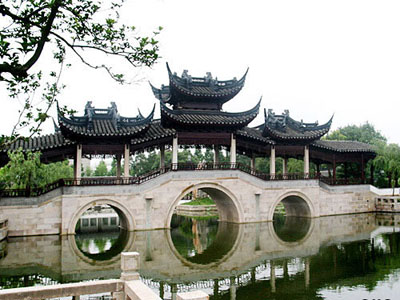
One more amazing attraction in Wuzhen is bridge in bridge. Tongji Bridge lies from east to west crossing Renji Bridge that runs from south to north. The unique thing is that either of Tongji and Renji bridges can be seen through the end of the other. That is why it is called so.

Zhouzhuang Water Town

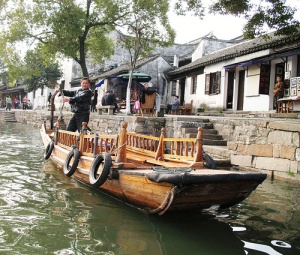
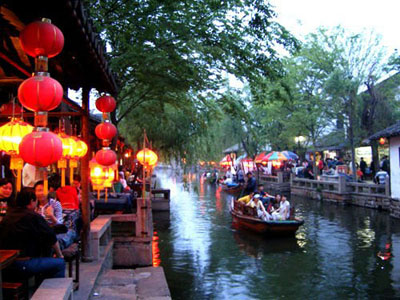
The most popular water village of China, Zhouzhuang Water Town is situated in the southeast of Suzhou city and of Kunshan’s southwest. The place is very famous of its cultural heritage, well preserved historical and natural environment, beautiful water views, and the humble innocent locality. No wonder it is called as the ‘Venice of China’, a must try trip in a ‘gondola-alike’ boat will leave breathtaking moments of every sight.

Zhouzhuang Water Town

Zhouzhuang Water Town

Surrounded by lakes and rivers, Zhouzhuang offers distinctive scenery. Twin Bridges, consist of Shide Bridge and Yongan Bridge, are well known as the symbol of Zhouzhuang. Not less famous is Fu’an Bridge, a bridge that functions more than a bridge. Inside the bridge towers, we can find restaurants, tearooms, and even stores. It is definitely a perfect place for resting while enjoying the charm of Zhouzhuang. Another attraction not to be missed in Zhouzhuang is Shen’s Hall of residence. The house is completely built in Ming’s style. The whole property occupies more than half an acre consisting of more than 100 rooms. What a house! I must say.

Zhouzhuang Water Town

Zhouzhuang Water Town

As the oldest water town in china, Zhouzhouang has its immortal charm. Salute to the efforts for preserving the water town very nicely. Even though so many tourists have been visiting every day, the place looks so authentic, natural and elegant. Walking by the road comes the feeling of living in China past. It is just slightly untouched by modernity. It is a refreshing treat from an ancient village. To get the complete fascination, early visit is advised. For so much of crowd around lunch time and weekends, to keep the memory of this endless charm of Zhouzhuang, some local products is available for collections. Stone teapot, silk, and paintings are most wanted. Also, pork leg and local beer are not to be missed.

Yangtze River FAQ ( Part Three)

Are there any new ships that are highly recommended to the travelers?

Yes! There are two newest Yangtze Cruise Ships which will make your Yangtze voyage unforgettable—Yangtze No. 2 and President Prime. For the Yangtze No. 2, its first voyage starts in September 2011 and it is the only Yangtze cruise equipped with indoor thermostatic and constant-humidity swimming pool. President Prime, with its first voyage on April 15th 2011, marks the new generation of super 5-star boat on the Yangtze River and will make you feel as “Home on the Water” .

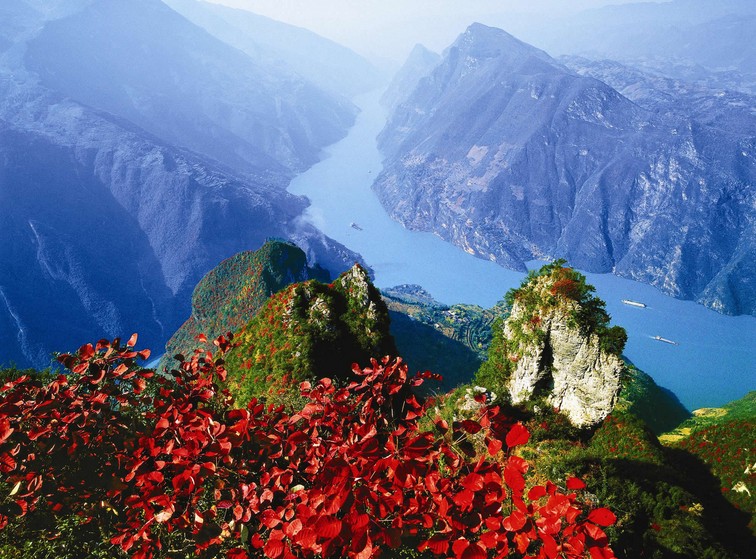
Wu Gorge

Wu Gorge

How many reaches are there for the total Yangtze River? And what are their characters?

There are three reaches: The Upper Reaches, Middle Reaches and Lower Reaches. The Upper Reaches of the Yangtze is a land of remote mountains, gorges and minority peoples which starts from the Tanggula Mountains, the Source of the Yangtze. You can appreciate the First Bend of the Yangtze River—Shigu (Stone Drum) Town, Tiger Leaping Gorge and Jade Dragon Snow Mountain in the upper reaches of the Yangtze.

The Middle Reaches of the Yangtze begin on the East Sichuan Plateau and flow steadily down through a system of canyon-like gorges to the plains of Hubei. Characters here are Chengdu Giant Pandas, Three Gorges, Fengdu Ghost City and the Lesser Three Gorges, Three Gorges Dam , Gezhou Dam and Shennong Stream.

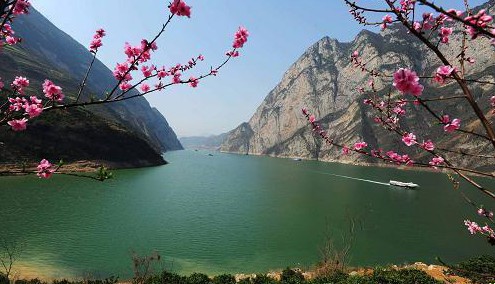
Xiling Gorge

Xiling Gorge

The Lower Reaches of Yangtze is “a land of fish and rice” which begins somewhere around Wuhan. You can see the Yellow Mountain Scenic Area, Nanjing, Yangzhou, Hangzhou, Suzhou and Zhouzhuang, Wuzhen, Xitang and Tongli Water Towns.

Are there any Budget Yangtze Ships for us to choose from?

Of course. There are three budget Yangtze Cruise Ships: The 3-day cruise, whose price starts only from $232; Popular 4-star President Cruise Ships with the price only from $362 for classic cruises between Chongqing and Yichang, especially the President No.1 and President No.6; 5-star Victoria Cruise that you can enjoy the high-quality and outstanding service and innovative itineraries at the cheapest price among all the luxury 5-star ships.

Chenghuang Temple

It is said that if you have not visiting the Chenghuang Temper during your Shanghai tour, you cannot really go to the great Shanghai, which means that the Old Chenghuang Temple has great status and influence in Shanghai. The Shanghai Chenghuang Temple in generally refers to the one in the Huangpu District, which called the “ Yuyuan Garden” in scenic spots, that is the original county Chenghuang temple in Shanghai. It is a famous Jiangnan classical garden and a national key cultural relics protection unit. The Yuyuan Garden especially gains popularity to the Chenghuang Temper.

Chenghuang Temple

Chenghuang Temple

Chenghuang Temple, being a famous temple in Shanghai with a long history, has attracted quite a lot of tourists come here to travel every year. The snacks there also are famous in China because of the popularity of the Chenghuang Temple. Located in the prosperous city, the Chenghuang Temple looks as an old person whose age is 100 years to stare at the Shanghai prosperity and development, up and down. When traveling there, just make a wish in front of the Buddha sincerely and maybe it will come true one day.

Chenghuang Temple

Chenghuang Temple

The snacks in Shanghai Chenghuang Temple is very delicious and it is too numerous to mention one by one. You cannot catch your eyes after entering into it. There are steamed bun stuffed with barbecued roast pork, Xiaolongbao, Rice with Stewed Chicken Leg, Noodles with pork chop, shepherd’s-purse wonton, sweet potato gruel, fried bread stick, fish ball soup, fried strong-smelling fermented bean curd, Ningbo dumpling, steamed crab meat dumplings, lotus root filled with sticky rice, crab roe soup dumplings and all kinds of cakes which will fully satisfy your appetite.

Travel information: 1) Ticket price: 10Yuan/adult; 2) Opening time: 8:30 a.m.-16:30p.m. 3) Best time to visit: all the year round; 4) Playing time suggestion: 2 -3 hours; 4) Ways to go there: take the city public buses no. 11, 24, 33, 55, 64, 66, 220, 801, 802, 926, 934; take the tunnel line 8 and 9 or take the metro line 10 to the Yuyuan Garden station.

Shanghai Urban Planning Exhibition Hall

Shanghai Urban Planning Exhibition Hall

Shanghai Urban Planning Exhibition Hall

Shanghai Urban Planning Exhibition Hall was completed in the beginning of 2000 and opening to the public in 25th February 2000. It is an AAAA level attraction whose floor space is 4000 square meters, building area 20,670 square meters and building height 43.3 meters and a more than one hundred meters long residents Leisure Street.

The modeling design of the main body of the pavilion building gets its inspiration from the gates of traditional Chinese form, and the structure schema which is symmetrical to center cleverly echo with the Chinese traditional aesthetics thought and modern sense that intelligently reflects the harmonious aesthetic feeling in the same building. Its top implies the blooming Shanghai city flower—Michelin Alba. Besides, the reticular structure for the building integrates the blue sky and the white clouds together. The building won the 2000 Shanghai “white magnolia prize” and national building highest honor award “Luban” award.

Shanghai Urban Planning Exhibition Hall

Shanghai Urban Planning Exhibition Hall

Features of the Shanghai Urban Planning Exhibition Hall mainly are its professionalism, infotainment enjoyment and a combination of history and the future, which gives a person with infinite daydream. Majestic momentum, the decoration style of the big, modern first-class high-tech means of the Shanghai Urban Planning Exhibition Hall vividly deduces the vicissitudes of life change there and shows the beautiful today in Shanghai and the bright prospects for the future. The Shanghai Urban Planning Exhibition Hall plays an important role on displaying the city theme, spreading the urban culture, promoting the spiritual civilization, showing the social effect and looking forward to the future development.

Travel information: 1) Opening time: 9:00 a.m. -17: 00 p.m. everyday from Tuesday to Sunday and closed on Monday; 2) Ticket price: 30 RMB/adult; 3) Ways to go there: take the Metro line 1, 2, 8 and the city buses no. 49, 123, 46 and also take the tunnel line 6.

« Older posts Newer posts »

© 2025 China Yangtze.com

Theme by Anders NorenUp ↑