China Yangtze.com

China Yangtze River Information: cruises, maps, pictures, ships, three gorges dam.

Page 6 of 72

Facts of Yangtze River

Yangtze is the busiest and longest river of Asia and 3rd longest river of the word followed by Amazon and Nile. It is called as Chang Liang in Chinese which means Long River and the name Yangtze is only for describing the section of the river which is near the mouth. Yangtze also means child of the ocean.

It flows for about 3,964 miles from where it originates about 21,700 feet up in the mountains of Kunlun on the Tibetan plateau which is to the East China Sea near Shanghai. It drops off the Tibetan plateau and descends about 1000 feet in the first 600 miles which is separated by the massive ridges from the Salween and Mekong Rivers.

Yangtze River

Yangtze River

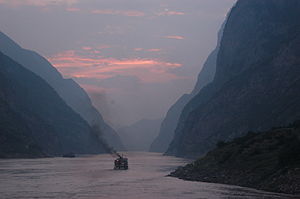
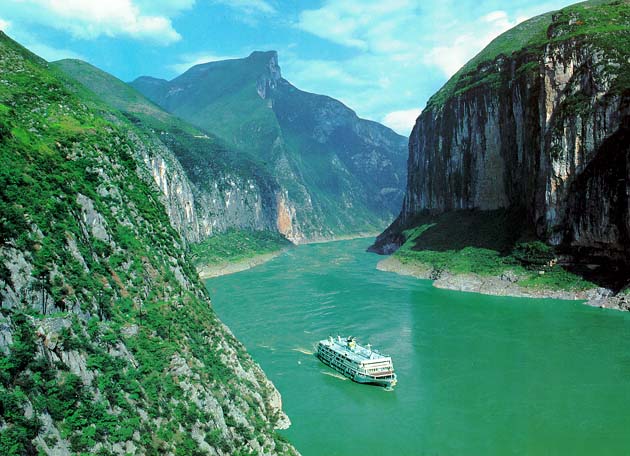
The Yangtze River passes through five canyons, nine provinces and literally divides China between North and South. After reaching the city of Chongqing at an elevation of more than 600 feet, it wanders through the massive alluvial plain and navigable for the large ships. Wuhan is 600 miles inland and one of the major ports of this river. Hanyang, Hankow and Wuchang are some important ports. At the mouth of Yangtze Kiang, it empties into the sea which is about 40 miles wide. The Yangtze River here releases about 8 million gallon into the Sea of East china every second.

Yangtze River

Yangtze River

The Watershed of Yangtze River encompasses 700,000 square miles while is the 20 percent of the total land area of china and encompasses about 700 tributaries which accounts for the 35 percent of the total fresh water resources of China. pit carries the three-fourth of the internal waterway commercial of china and irrigates over third of the agricultural output of china producing 40 percent of the nation grains, 25 percent of rice, 30 percent of cotton, 48 percent freshwater fish and 40 percent of total industrial output of China.


Yangtze River Facts

Name– Yangtze River (Chang Jiang/ Chang-jyang)

Meaning– Long River

Features

  • Longest River in Asia and 3rd longest river in the world
  • One of the two main rivers in China
  • Yangtze River Cruises
  • Ancient places, artwork and history
  • Industrial, Scenic and ancient sites
  • Huge inland waterway for industry and travel
  • Biggest dam
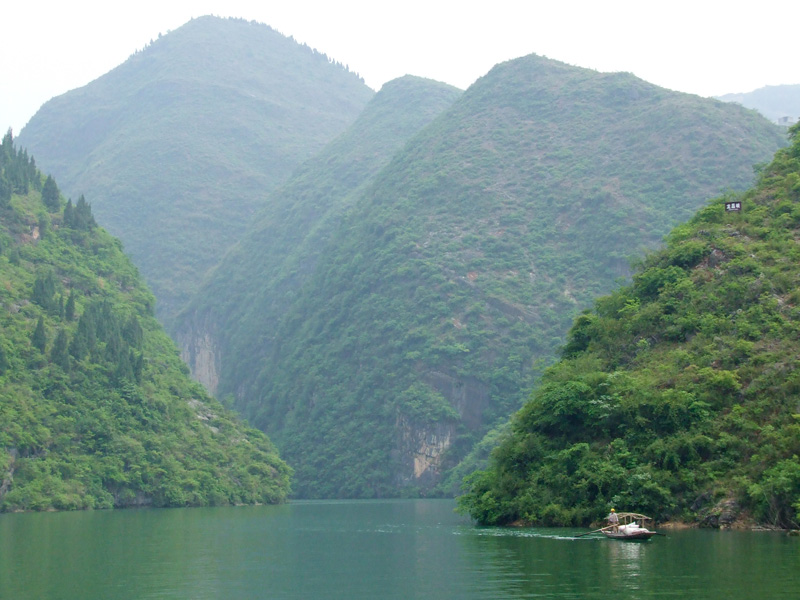
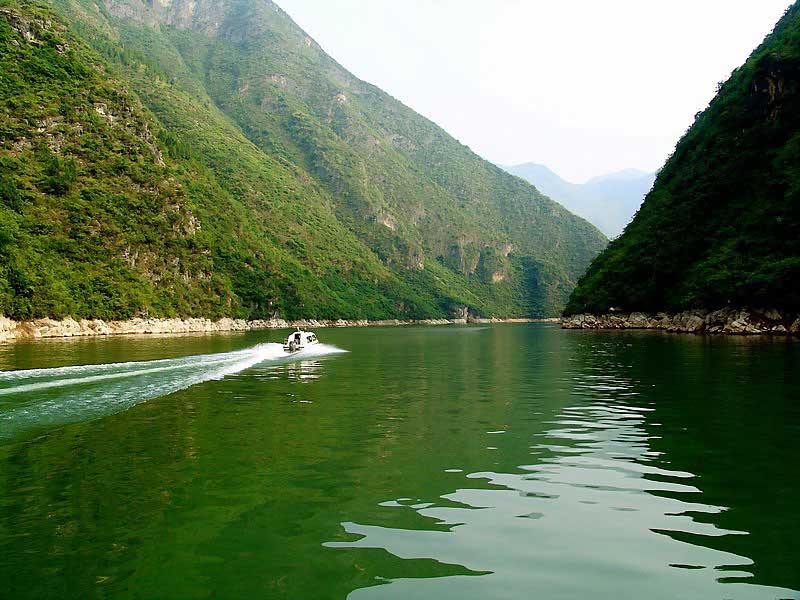
  • Stunning array of scenery- it ranges from the high peaks of Qinghai to inland plain and from jungles and natural highlights to the biggest dam, The Three Gorges Dam, having biggest electric generation installation to big cities along the Yangtze to the sea
Yangtze River

Yangtze River

Most Popular Sections

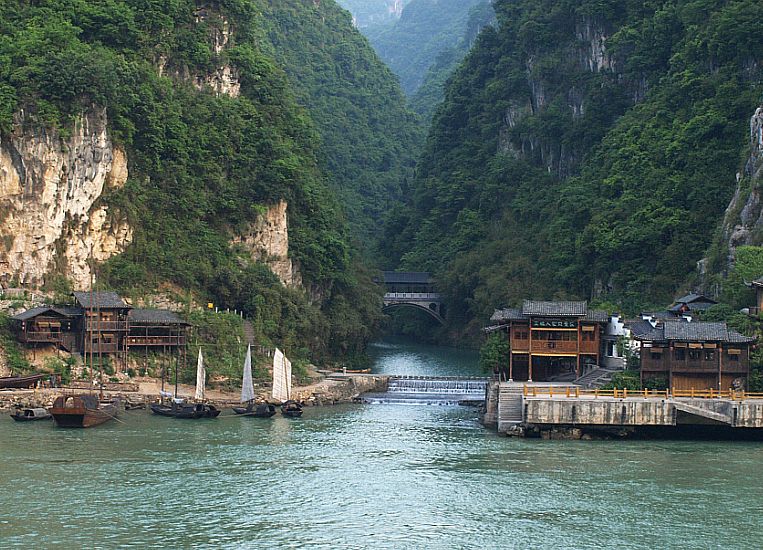
•          Middle Reaches: Lesser Three Gorges, Three Gorges and Chongqing,Fengdu Ghost City

•          Lower Reaches: Nanjing, Wuhan, Shanghai

•          Upper Reaches: Lijiang, First Bend of the Yangtze River, Tiger Leaping Gorge

Plan Your Yangtze River cruise

•          Most popular local products and souvenirs: Dairy and fruit products around Lijiang, porcelain, Chinese paintings, silk, jade, jewelry and silverware in Shanghai Nanjing

•          Most popular food: meat and products in Lijiang, reganmian  or hot dry noodles in Wuhan, hotpot in Sichuan and Boiled Duck and eight delicacies soup With Salt n Nanjing.

History

•          The British Empire established a trading concession in Wuhan in 1861.

•          Little captained the first steamship that reached Chongqing in 1898.

•          In late 20th century, many Yangtze River locations became international tourist attractions.

•          China began excavating a side channel for blocking the Yangtze River and building the dam in 1993.

Yangtze River

Yangtze River

Geography

•          Significance: The basin of Yangtze is the home for one third of population of China, and the river allows ship transport to all the way to Chongqing. It is the most important river for industry, agriculture and inland travel. It is also considered to divide the line between northern and southern China.

•          Tourism: You can view the one of the deepest gorges of the world at the Tiger leaping Gorges along with many ancient and scenic spots and one of the biggest cities and industrial areas of world in Shanghai.

Facts of yangtze River

The Yangtze River is third longest river in the world after the Nile in Africa and Amazon of South America and longest river in Asia. This river is called as Chang Jiang in Chinese which mean Long River and this name can be found on many modern maps in English.

The name Yangzi which is translated to Yangtze was originally used by the local people for referring to the lower reaches of this river. As this was the first name which was heard by the traders and missionaries, it has been applied to the entire river in English. The name is found in many forms which include Yangtse River and Yangtsze Kiang. It runs through the deep gorges in parallel to the Salween and Mekong before it emerges into the plains of the Sichuan. The river is known to the Chinese as Jinsha River or Golden Sand River. The Yangtze River is also referred to Golden waterway.

Yangtze River

Yangtze River

This river is about 6,380 kilometers long and is traditionally considered as the dividing point between north and south China although The River Huai sharing the claim.

The Yangtze flows into the East China Sea. In the year 2003 ,before the construction of Three Gorges Dam, Fengjie, the first of a number of towns affected by the massive flood control and power generation project. This project is the largest irrigation project of the world and freed people living along the Yangtze River from the flood which threatened them in the past and offers them the electricity and water transport.

Yangtze-River

Yangtze-River

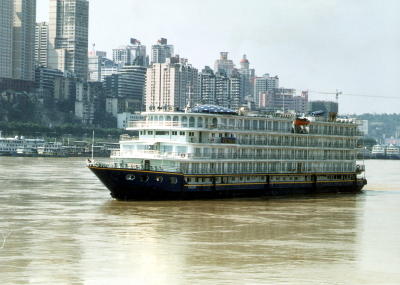
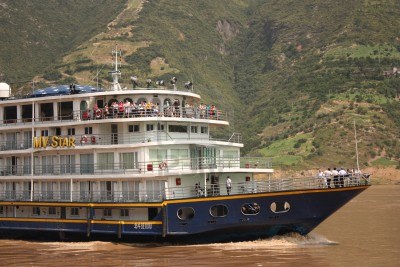
This river is the major transportation artery for China which connects the interiors with the coast. The traffic of river includes commercial transporting of bulk goods like coal as well as manufactured goods and passengers. River cruises of duration of several days especially through the scenic and beautiful Three Gorges area have become very popular as the tourism industry grows in China.


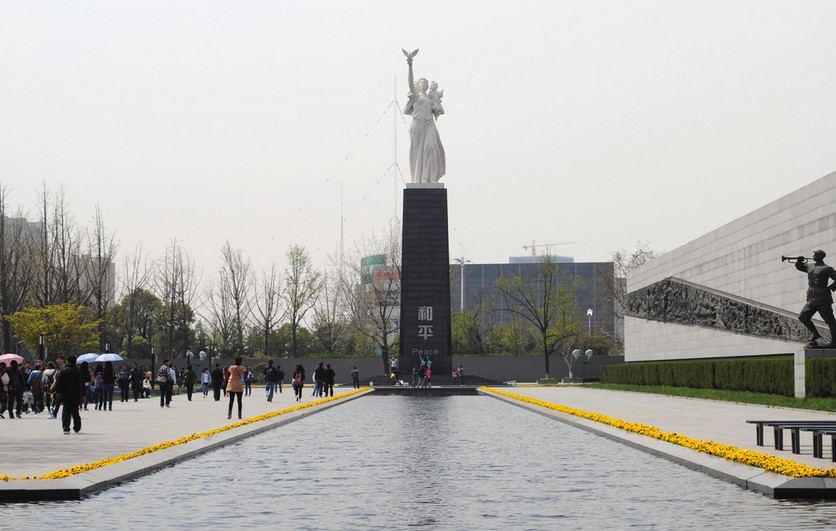
Memorial Hall to the Victims in the Nanjing Massacre

Memorial Hall to the Victims in the Nanjing Massacre

Memorial Hall to the Victims in the Nanjing Massacre

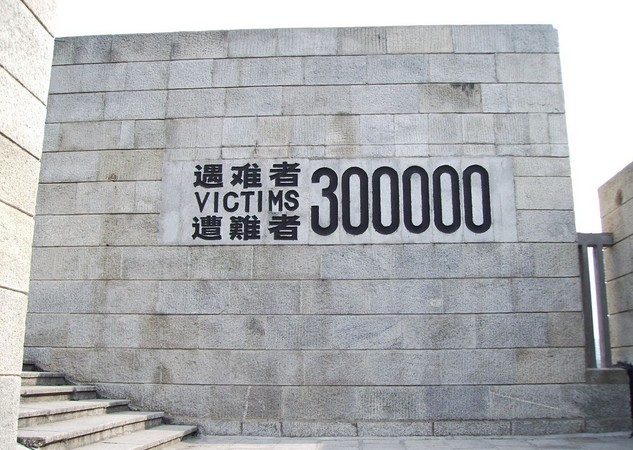
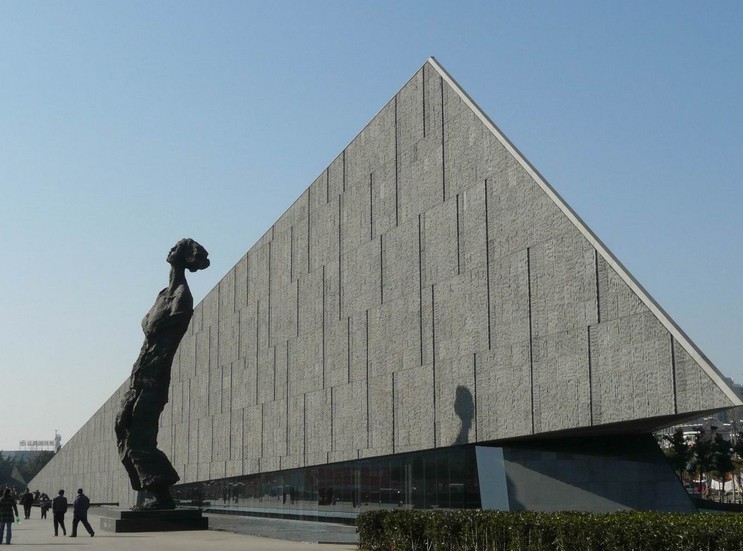
Memorial Hall to the Victims in the Nanjing Massacre is located in the China Nanjing Jiangdongmen street. It is the place for the Jiangdongmen massacre sites and the cemetery of the victims during the Nanking Massacre caused by the Japanese forces of aggression against China. To mourn the victims of the Nanjing Massacre, the Nanjing people’s government built the memorial in 1995 and expanded it in 1995. Covering an area of 30,000 square meters with the building area of 5000 square meters, the building adopts the gray marble to make it grand and solemn, which is a specific history gallery showing the “Nanjing Massacre” catastrophic tragedy in a comprehensive technique combining the historical data, cultural relic, architecture, sculpture, film and television. The left side of its gate is engraved the its hall name “The Memorial Hall of the Victims in Nanjing Massacre by Japanese Invaders” written by Dengxiaoping. The display there is divided into three parts:square display, osseous remains display and historical data display. And the square display is made up with three exterior display fields: mourn square, memorial square and graveyard square.

Memorial Hall to the Victims in the Nanjing Massacre

Memorial Hall to the Victims in the Nanjing Massacre

The remembrance of the past is the teacher of the future and history is any guide to create the future. Memorial Hall to the Victims in the Nanjing Massacre now is an importance place to pray for international peace and international historical cultural exchange, at the same time it also is “the national patriotism education base” of primary and secondary schools, the national youth education base and the .national patriotism education demonstration base.

Memorial Hall to the Victims in the Nanjing Massacre

Memorial Hall to the Victims in the Nanjing Massacre

Travel tips: 1) Opening time: 8:30 a.m. -16:30 p.m. and close on Monday. 2) Ticket price: free. 3) Best time to visit: all the year round. 4) Playing time suggestion: 1-2 hours. 5) Ways to go there: take the No.37 city public bus to the Jiangdong memorial hall door station or take the No.78 city public bus to Yushu village station.

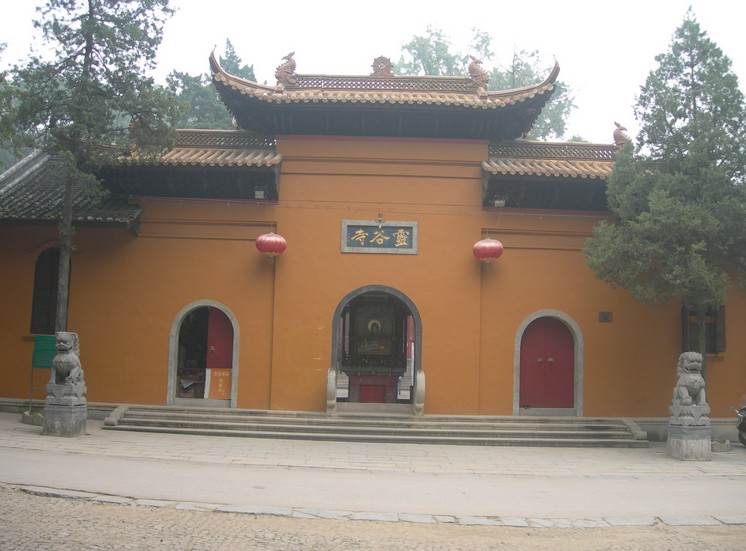
Linggu Temple

Linggu Temple

Linggu Temple

Linggu Temple, located in 1.5 kilometers east of the Sun Yat-sen Mausoleum in Nanjing city, is also called Jiang Shan Temple and it is now in Ming Xiaoling Mausoleum.

Linggu Temple once was one of the Jinling 48 scenes featuring winding path leading to a secluded spot, and pine forest. In its east area, there is the plum blossom dock with green plum which is blossom in the early spring whose flowers are numerous as snow and also flowery. However, all of beautiful scenery have been destroyed by the warfare in Qing Dynasty and what have been maintained is only the stele titled “Ling Gu Shen Song” by the Qianlong in Qing Dynasty. Linggu Temple nowadays, most of them are rebuilt in the Tongzhi Emperor period, though the scale is not so large than the before one, it is also one of the famous attractions in Nanjing with wonderful scenery and it has been renamed as the “Linggu Park” since the foundation of the country.

Linggu Temple

Linggu Temple

Covering an area of 500 hectares, the Linggu Temple is mainly composed of Red Mountain Gate, soldier’s arches, Wuliang Palace, Songfeng Pavilion, Linggu Tower, Baogong Tower, Pipa Street and other buildings.

Walking along the Linggu Temple, you can see the red walls, yellow tiles, green pines, luxuriant forests, and you can also sense birds singing and the sweet smell of the flowers in the quiet environment as it is the wonderful scenery of the Linggu Temple in deep autumn. Temple courtyard now sets into a total of three layers, among which the west is the Mahavira Hall with the Buddha statue in the middle of hall and the Goddess of Mercy and ksitigahba Buddhisattva in its both left side and right side and also 18 Lohans arranged on both sides of the hall; east once was Guanjian Hall but has changed into the memorial hall of the Xuan Zang mage. Go for a visit there to discover more interesting and wonderful scenery.

Purple Mountain

Purple Mountain, also called BELL MOUNTAIN, is located in the Xuanwu area in Nanjing city.The main peak ‘s elevation is of 448.9 meters with about 30 kilometers. It is national key scenic spot. The national 5 a-class scenic area of Sun Yat-Sen Mausoleum scenic spot is located at its foothill. BELL MOUNTAIN’s three peaks are connected with each other with whose shapes look like megalosaurus. Its mountain, water and city are integrated mass together to make it magnificent and great and momentous. The mountain is steep and winding just as a dragon. Purple Mountain has many scenic spots and historical sites nearby: Zixia Cave in its south, Sun Yat-sen Mausoleum in its front, Meihua Mountain, Ming Xiaoling Mausoleum and He xiangning Tomb in its west, Linggu Park in its east and some mausoleums of the Ming dynasty in its north.

Purple Mountain

Purple Mountain

Zhong shan is located in the north temperate zone and subtropical zone, as the plant introduction transition zone, plant variety is rich, trees are lush . It stretches 7 km long in its east-west direction and about 3 km wide in its north-south side.

Purple Mountain

Purple Mountain

Nanjing is a subtropical humid climate with its annual average temperature 16 ℃, annual rainfall 1106.5 mm, and the middle of June to the beginning of July are the plum rain season. Nanjing is used to called the stovepipe, July and August sometimes extreme maximum temperature is as high as 40 ℃ and usually is at about 35 ℃, but in recent years it has become the national advanced city landscaping with its greening rate more than 30%; therefore, more and more tourists come to visit Nanjing in summer time. It usually snows in January and February, and it will fire your imagination if you are fortunate to meet the heavy snow in Nanjing as it is so charming and moving. Just go to visit the Purple Mountain by taking the tour buses no.3, 20, 315, 48, 308 and 125 to the Purple Mountain cableway station.

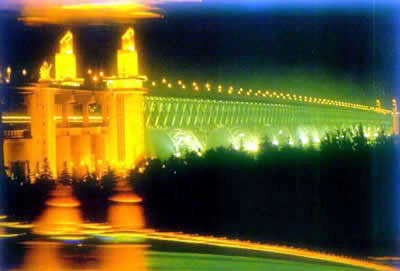
Nanjing Yangtze River Bridge

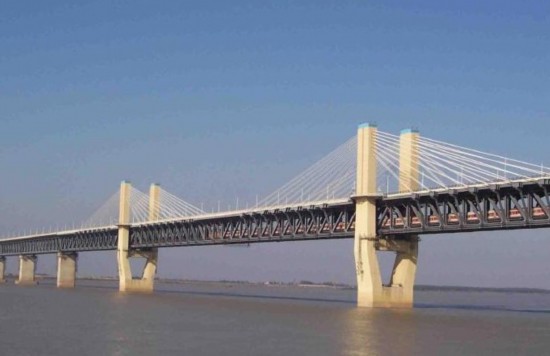
Nanjing Yangtze River Bridge, located in the northwest of Nanjing Yangtze River, connecting the Nanjing downtown and Pukou, is the first self-design bridge for double type railway and highway over the Yangtze River, which is of great significance in the history of the Chinese bridge. Upper level of the highway bridge is 4589 meters long, roadway width of 15 meters, which can hold 4 large cars parallel, and it also has 2 meters wide sidewalks on both sides; below the railway bridge is 6772 meters long and 14 m wide, covered by dual track, making two trains can be split at the same time. Among them the right bridge on the river is 1577 meters long, the rest are for the bridge approach, which makes it our country No.1 Bridge. Column on the right bridge road, the highway bridge approaches with rich Chinese characteristics form of double orifice hyperbolic arch bridge. The railings on both sides of the right bridge on the road are embedded with 200 cast iron reliefs, and there are 150 white magnolia flower shaped lamp on the sidewalk. It has been listed as one of the Nanjing Jinling 40 landscapes and also the “World’s Longest Male Iron Bridge” to the “Guinness Book of World Records” in the 1960s.Nanjing Yangtze River Bridge

Under the north and south on both sides of the Nanjing Yangtze River Bridge, there are about 20 hectares of Bridge Park, which plants with all kinds of trees and flowers, and there is direct-elevator to the depth of the bridge deck on the bridgehead. Nanjing Yangtze river bridge Nanpu Park on the on the south bank of the bridge also sets exhibition hall to introduce the history of the Yangtze River Bridge, which makes the Yangtze River Bridge much more magnificent.

Nanjing Yangtze River Bridge

Travel information: 1) Ticket price: free. 2) Opening time: all day around. 3) Time duration: half an hour. 4) Best time to visit: all the year round. 5) Ways to go there: take the city buses no. 12, 15, 38, 67, 69, 117,149,307 and 809.

Confucius Temple

Confucius Temple

Confucius Temple

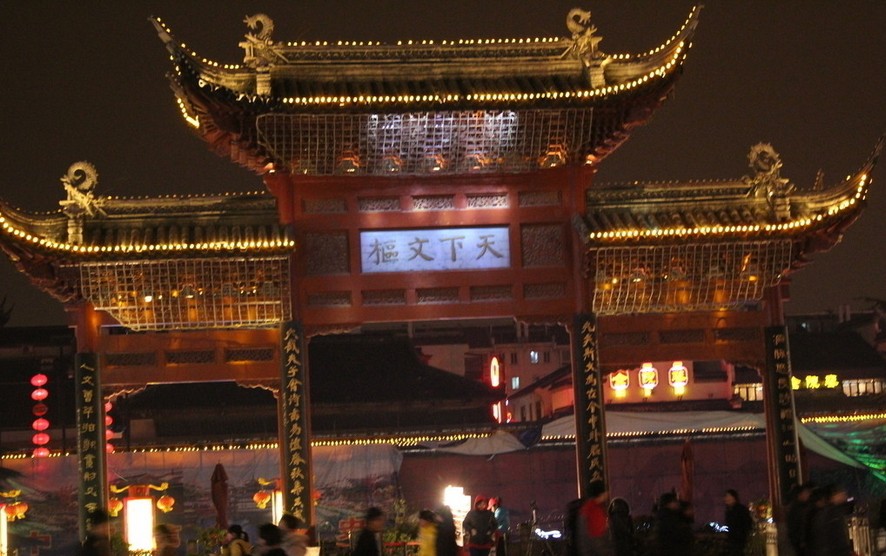
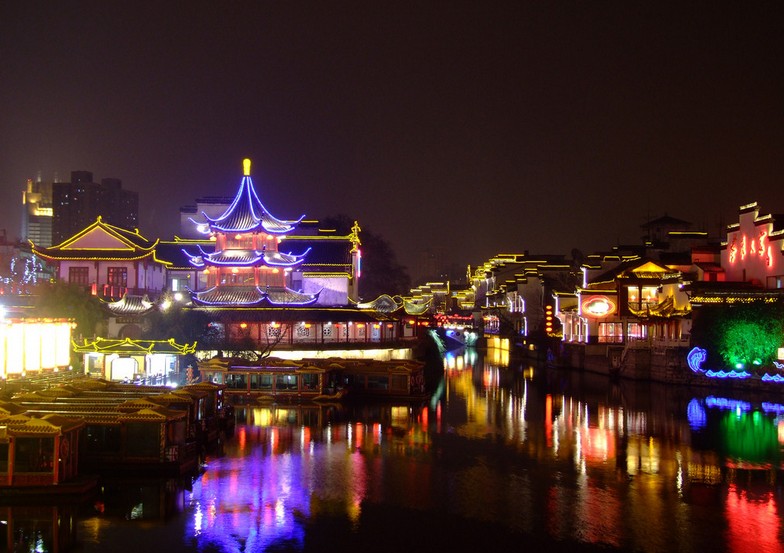
Confucius temple is a set of large-scale ancient architectural complexes, and through the vicissitudes of life, a few times and waste, it is a place to worship and sacrifice to Kongzi, a famous thinker and educator in ancient China. As one of China’s four big temple, it is horned as famous scenic spot along the Qinhuai River and characteristic landscape areas in ancient capital Nanjing and also a famous attraction at home and abroad. Confucius Temple is not only a cultural and educational center in Nanjing since Ming and Qing dynasties, it is also the top one culture and education buildings among the southeast provinces. Nanjing Confucius Temple has now become a famous attraction on the Qinhui River scenic belt characterized by Ming and Qing architectural style. It sets the Dacheng Palace as its center with a north-south axis around construction symmetry. Covering an area of about 26,300 square meters, the Confucius Temple has been Municipality Protected Historic Site .

Confucius temple area is the birthplace of the Nanjing snacks and it has been the city’s hawker centers early the six dynasties. There are 20 snack bars in total. Nanjing Confucius Temple lantern show, also called Qinhuai Lantern Fair, is a kind of characteristics of folk culture activities spreading in Nanjing area which is mainly held during the Spring Festival and Lantern Festival in a year. As an important folk cultural activities, it has become an important part of culture. anjing Confucius Temple lantern show attracts many tourists from home and abroad every year, and they appreciate the lantern show and experience the Jinling folk culture and meanwhile promote the region’s economic development.

Confucius Temple

Confucius Temple

The Confucius Temple lantern show has great influence not only on historical significance, humanistic value, economic value but also social impact. As Nanjing area characteristic cultural space, it will further carry forward and inherit. If you want to have a visit there, you can take the city public buses no.4, 7, 44, 49, 62, 304 or take the tour buses No.2, 1, 15 to the Confucius Temple station (north).

Ming Xiao Mausoleum

Ming Xiao Mausoleum is located in a beautiful environment, surrounding is the ups and downs around to the mountain, and the mountain along the water there, which makes the humanities and the natural landscape like nature itself. Ming Xiao Mausoleum features cemetery scale and rigorous pattern. From the Xiama fang to the Boseong, the Ming Xiao Mausoleum is 2.62 kms deep, whose main architectures are surrounded by red walls with the total length of 2.25 kilometers. Extant ruins can be divided into two parts.

Ming Xiao Mausoleum

Ming Xiao Mausoleum

As China’s first of Ming tombs, the magnificent Ming Xiao Mausoleum represents the Ming building and stone carving art of the highest achievements, and has direct impact on the Ming and qing dynasties imperial mausoleum of shape for more than 500 years. Other mausoleums spread over Beijing, Hubei, Liaoning, Hebei in accordance with the historical process are built according to nanjing MingXiaoLing regulation and model construction. It has been listed as the World Cultural Heritage by UNESCO in 2003.

Ming Xiao Mausoleum

Ming Xiao Mausoleum

Ming Xiao Mausoleum the product of human change nature embodying the traditional architecture and decoration ideas and illustrating the world outlook and conception of feudal China continues for more than five hundred years. Mausoleums of the Ming and Qing royal spreading in Beijing, Hebei, Liaoning, Anhui, Jiangsu are the Ming and Qing dynasties emperor mausoleum buildings according to the strict rank construction of rules and regulations owing complete ground and underground building system with rigorous layout, grand scale, beautiful buildings and sophisticated technology that shows the highest in China’s feudal society of the funeral system. It is a famous mausoleum in China which worthy your visit.

Travel information: 1) Opening time: 7:00 a.m.-18:00 p.m. 2) Ticket Price: 70 RMB/adult. 3) Best time to visit: Spring time and Autumn time. 4) Duration: 2-3 hours. 5) How to get there:take the tour buses no.2, 3 and 20 or take the metro line 1.

President Palace

President Palace

President Palace

President Palace is located in the Changjiang Road in Nanjing and now it has become China’s largest museum of modern history . The President Palace in Nanjing has a history of more than 600 years, more than 100 years from First Opium War in 1840 to the Nanjing liberation in 1949, it has witnessed a series of major events in China and has close relationship with that, moreover, some important characters also appeared here. The buildings, has become an important site in modern Chinese history.

President Palace was built on June 1 of the first year of the republic of China and completed on
March of the eighth years of the republic of China. The whole building is based on positive gate entrance building, one layer is closely linked another with the rigorous structure, symmetric shape and fine design. Towering columns, refined carve, deep corridors, delicate arch can be seen everywhere in the President Palace, which fully shows the Baroque-style architecture character during the European Renaissance.

President Palace

President Palace

Covering an area of 90,000 square meters with 3 visiting zones, the President Palace has been China’s political and military center and the birthplace of a major event for many times. It also witnesses China’s prosperity and decline during the Republic of China era, and it also a witness to the replacement of the Nanjing modern history. It is a good choice to have a visit during your tour in Nanjing.

Travel tips:1) Ticket price: 40 Yuan/adult; 2) Opening time: 07:00 a.m. – 18:00 p.m. During 1st March to 31st October; 07:30 a.m. – 17:00 p.m. During 1st November to 30th November and 08:00 a.m. – 17:00 p.m. During 1st December to 28th February. 3) Best time to visit: Spring and Autumn time. 4) Playing time suggestion: 2-3 hours. 4) Ways to go there: take the public buses no.29, 304, 44, 65, 95 and city tour buses line1 and line 2 to the President Palace station, or you can also take the subway line 2.

« Older posts Newer posts »

© 2025 China Yangtze.com

Theme by Anders NorenUp ↑