China Yangtze.com

China Yangtze River Information: cruises, maps, pictures, ships, three gorges dam.

Page 16 of 73

Leshan Giant Buddha

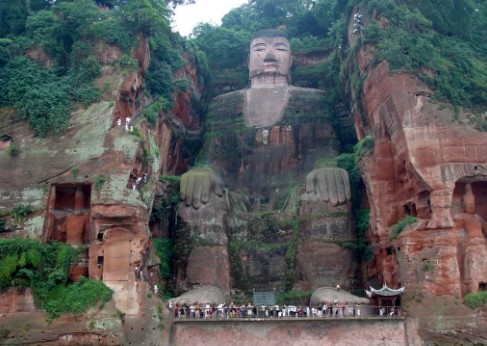
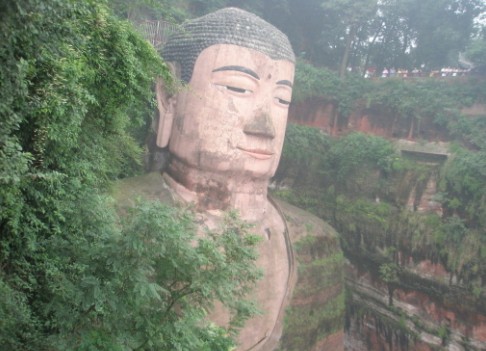
Being an AAAAA level scenic spot, the Leshan Giant Buddha, also called the Lingyun Giant Buddha, is located in the infall of the Minjiang River, Qingyi River and the Dadu River, facing the Leshan city in the other side of the river. Leshan Giant Buddha was caved in the crags of the infall of the three rivers and it is a Maitreya Buddha statue in the cliff of the Lingyun Mountain along the south band of the Minjing River. It is one of the art boutiques of the inscriptions statues in Tang Dynasty and the biggest stone carvings Maitreya Buddha statue in the world.
Leshan Giant Buddha

Leshan Giant Buddha

The Giant Buddha sits in the square and serious posture with his hands on his knees, whose appearance looks so solemn. With the exquisite and clever design, the drainage facilities of the Giant Buddha are implicit and invisible.

Leshan Giant Buddha

Leshan Giant Buddha

The Leshan Giant Buddha scenic area is composed of Lingyun Mountain, Wulong Mountain, giant sleeping Buddha landscape etc. Covering an area of 8 square kilometers and belonge to the Mount Emei scenic area, the Leshan Giant Buddha is a famous scenic area that has attracted a plenty of travelers from home and abroad. There goes a saying for Leshan Giant Buddha, “Go up for Mount Emei and go down for Lingyun Mountain.”
Leshan Giant Buddha

Leshan Giant Buddha

With its height of more than 70 meters and 20 meters higher than the biggest standing Buddha statue in Afghanistan, the Leshan Giant Buddha has been sitting here quietly for thousand years, watching the river running in front of it and seeing the world changing.

Travel tips: Opening time: 7:30 a.m. -18:30 p.m. in peak season during 1st April to 7th October and 8:00 a.m.-17:30 p.m. during the slack season from 8th October to 31st March; 2) Ticket price: 90 RMB/ adult including the ticket prices of the Leshan Giant Buddha, Wurao Temple and Mahaoya Tomb. 3) Duration: 4 hours. 4) Best time to visit: all the year round.

Emei Mountain


Emei Mountain

Emei Mountain

Emei Mountain, located in the Emei city of Sichuan province in the southwest of Sichuan basin with 7 kilometers away from the Emei city center in the west and 37 kilometers away from the Leshan city center in the east, covers an area of 154 square kilometers, whose peak is 3,099 meters above the sea level. Featuring the steep terrain and the beautiful scenery, the Emei Mountain enjoys the reputation of “ Top Mountain under Heaven.” The climate there is various and the vegetation is rich with a total number of more than 3,000 plants, among which including some rare tree species in the world. There are also many Monkey Folk along the mountain path, which often in droves to tourists to beg for food, and this is one main unique feature of the Emei Mountain.

Emei Mountain

Emei Mountain

Emei Mountain is one of the four great Buddhist mountains in China and also an AAAAA level scenic spot in China, and the Leshan Giant Buddha of the Emei Mountain has been listed in the list of World Heritage Sites by UNESCO as both cultural and natural heritage in 6th, December 1996.

The Emei Mountain is a famous scenic spot that has attracted numerous travelers from home and abroad. It is characterized by grandness, elegance, miraculousness and spectacularity and profound Buddhist culture. It is also famous for its foggy weather as it is always curled up by the cloud and mist all the year round and they are permeated among the mountain with various shapes to make the Emei Mountain very pretty and charming.

Emei Mountain

Emei Mountain

Travel information: 1) Opening time: 6:00a.m. -18:30p.m. during the peak season from 16th January to 14th December and 7:00 a.m. -17:50 p.m. during the slack season from the 15th December to 15th January. 2) Ticket price: 185 RMB/ adult in peak season and 110 RMB/ adult in slack season. 3) Duration: 3 days. 4) Best time to visit: spring time and autumn time as the climate is moderate and the scenery is charming. 5) Best time to appreciate the sunrise is the 5:45 a.m. in summer and 6:50 a.m. in winter; appreciate the sea of clouds and the Light of Buddha in 9:00-10:00 in the morning and 3:00-4:00 in the afternoon; appreciate the rhododendron in the end of April to May and the red autumnal leaves in October; Play with snow and go skiing in November to March.

Jinsha Ruin


Jinsha Ruin
Jinsha Ruin

Covering an area of more than 5 square kilometers, the Jinsha Ruin is located in the one site of the Shang and Zhou ages in Jinsha Village, Chengxi Supo County, Chengdu in Sichuan province. It is one of the national key cultural relics protection units in China and the first important archaeological discovery when China entering into the twenty-first century.

The Jiansha Ruin is discovered by those civilian workers who excavated the construction plant of the Shufeng garden street. It became famous the moment being excavated out after being burnt under ground for more than 3,000 years as its Sun God Bird Ring is so magnificent and glorious. Being 50 kilometers from the sanxingdui relics site, the Jinsha culture was found in 1250 BC to 650 BC, among which it was the most prosperous in the 1000 BC. The Jinsha Culture and the Sanxingdui Culture is similar, however, the Jinsha culture has no wall and it equals to the last issue of the Sanxingdui, which stands of one transfer of the political center of the ancient Shu country in China.

Jinsha Ruin

Jinsha Ruin

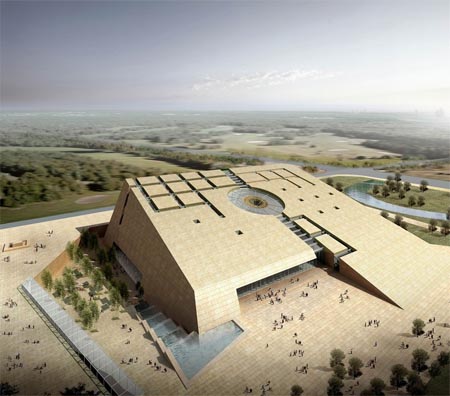
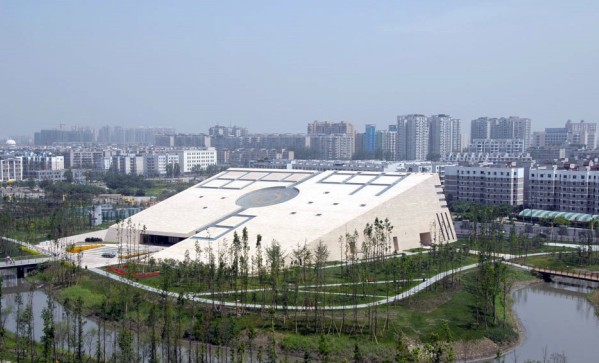
The Jinsha Ruin Museum is open in 2007, which exhhibit the relics and the sacrificial area spot of the site. Covering an floor area of 300, 000 square meters and overall floorage area of 38, 000 square meters, the Jinsha Ruin Museum is built to protect, research and exhibit the Jinsha Ruin and the unearthed cultural relics, which composed of four main parts: the ruins museums, the exhibition hall, the relics protection center and the garden area. Traveling here, you will find sacrifice places, huge buildings, normal residences, and graveyards.

Travel tips: 1) Opening time: 8:00 a.m. to 17:30 p.m. all the year round; 2) Ticket price: 80 RMB/adult; 3) Ways to go there: take the city public buses No. 5, 7, 32, 41, 79, 82, 83, 84, 88, 96, 100, 111, 163, 305,311 and 320 to the Jinxi Road West stop near the Jinsha Ruin Museum within 20 meter; 4) 18th, May is the “ International Museum Day”, and the Jinsha Ruin Museum if free to all travelers during that day.

Sanxingdui in Chengdu


Sanxingdui in Chengdu

Sanxingdui in Chengdu

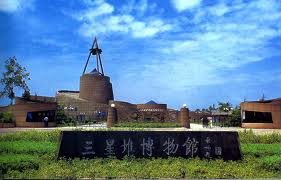
Located in the Guanghannanxing County in Sichuan province, the Sanxingdui got its name because of three towering yellow hills in the Chengdu plane and it has been the national key cultural relic protection unit and the ruin site of the “Green Bronze Period” in the north-west China. It is the representative of the earlier culture of the Yangtze area and the earliest culture that has been known in the letter history until now in China, which characterized by both the Baodun Culture of the ancient Shu country and the Jinsha Culture with a long history of about 2,000 years.

Sanxingdui in Chengdu

Sanxingdui in Chengdu

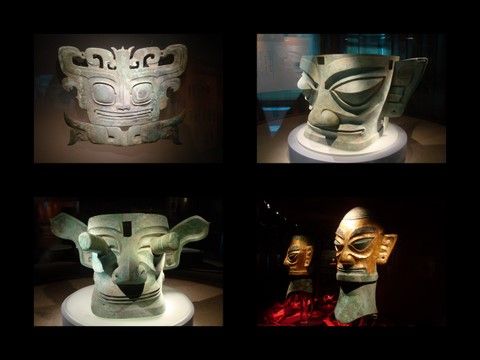
The Sanxingdui has broken a plenty of the world record and among which some are listed in the World Record Association in the follows: 1) the earliest and tallest Bronze Tree in the world whose weight is 384 centimeters, it is judges as the hibiscus tree in the ancient fairy tales. 2)  The earliest gold scepter in the world whose length is 142 centimeters, diameter 2.3 centimeters and weight about 700 grams with some emblazonry such as human heads, fish and birds engraved on it. 3) The biggest and most intact statue of the bronze great standing person in the world, known as the king of the bronze statue, is 262 centimeters high and 180 kilograms weight. 4) The biggest bronze lengthways-view human statue in the world with its height 64.5 centimeters and the distance between two ears 138.5 centimeters. 5) It produced the most bronze human head statues and masks one time in the world reaching 50 pieces.

Sanxingdui in Chengdu

Sanxingdui in Chengdu


The historical value of the finding of the Sanxingdui in the field of history features the following important meanings: 1) It helps people to reknow about the Bashu culture; 2) It spreads the bronze culture over the world. 3) It expresses the national worship of the Chinese people.

Travel information: 1) ticket: 80 RMB/adult for the Sanxingdui Museum and 5 RMB/ adult for the garden visiting. 2) Ways to go there: Take the long-way Shifang bus in the Chengdu bus station and get down in the Sanxingdui in the mid-way with the distance of about 1hour drive and price of 6 Yuan; besides, there are non-stop tourist cars to the Sanxingdui from Chengdu.

Wuhou Memorial Temple


Wuhou Memorial Temple

Wuhou Memorial Temple

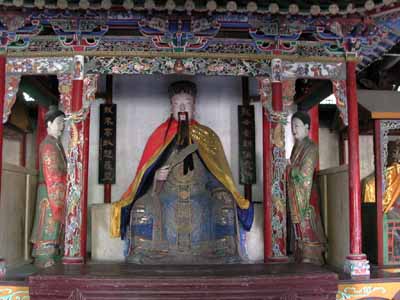
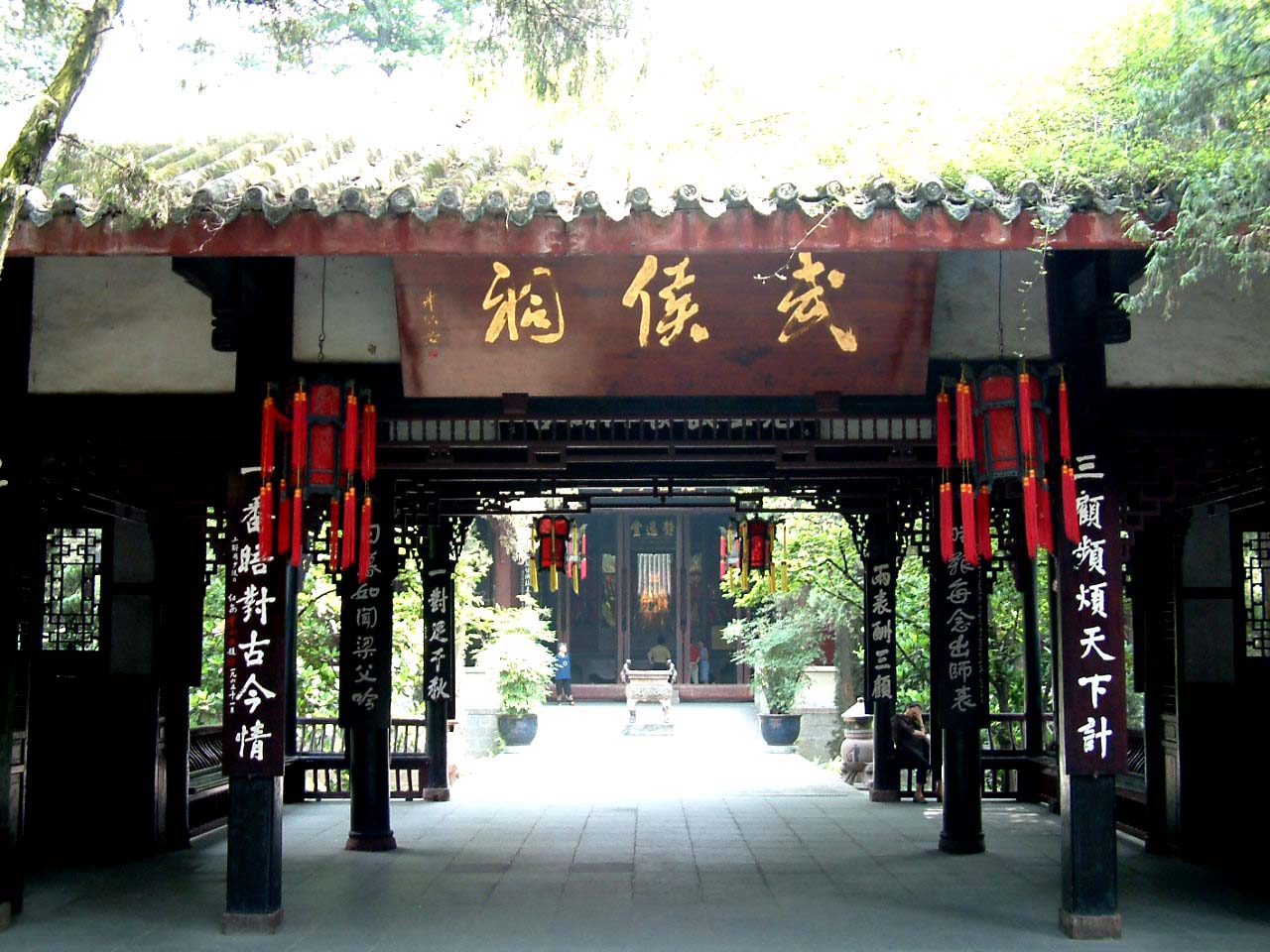
Wuhou Memorial Temple, located in Chengdu of Sichuan province and covers an area of 150,000 square meters, is first built in the year of 223 during the Liubei period and it is the only memorial temple in China for both emperor and officials and the most famous memorial site for Zhugeliang, Liubei and other heroes in Shuhan period in China. Moreover, it is the biggest museum for the Three-Country heritage in the world. It has been listed as the key cultural relics protection unit in 1961 and the first level museum in China in 2008.

Divided into three main parts historical heritage area (relics area), west area (the experience area of the Three-Country), Liji customer area (Liji), the Wuhou Memorial Temple enjoys the reputation of the “Holy Site of the Three-Country” and it has attracted hundreds of thousands travelers from home and abroad.

Wuhou Memorial Temple

Wuhou Memorial Temple

Also called the Temple of Marquis, the Wuhou Memorial Temple was built to remember the master of Zhugeliang in Three-Country period and it got the name because of the “Marquis” honor that Zhugeliang got before he died. It is a AAAA attraction and the major scenic spot introducing and memorizing the Zhugeliang in China and also a famous attraction in Chengdu. Traveling here, you will find all the buildings such as the main gate, the second gate, the Hanzhao Temple, the Wuhou Memorial Temple etc. were arrayed in the middle axis line from the south to the north. Besides, you can also find the Liubei Palace is the tallest and its architecture is the most majestic. I’m sure you will feel shocked when having a visit here.

Travel information: 1) Opening time: 7:30 a.m. to 21:00 p.m. in summer and 8:00 a.m. to 18:30 p.m. in winter. 2) Ticket price: 60 RMB/ adult. 3) Ways to go there: take the city public buses No.1, 10, 57, 82, 301, 334, 335, 123, 321, 901 or 904.

Dufu’s Thatched Cottage


Dufu's Thatched Cottage
Dufu’s Thatched Cottage

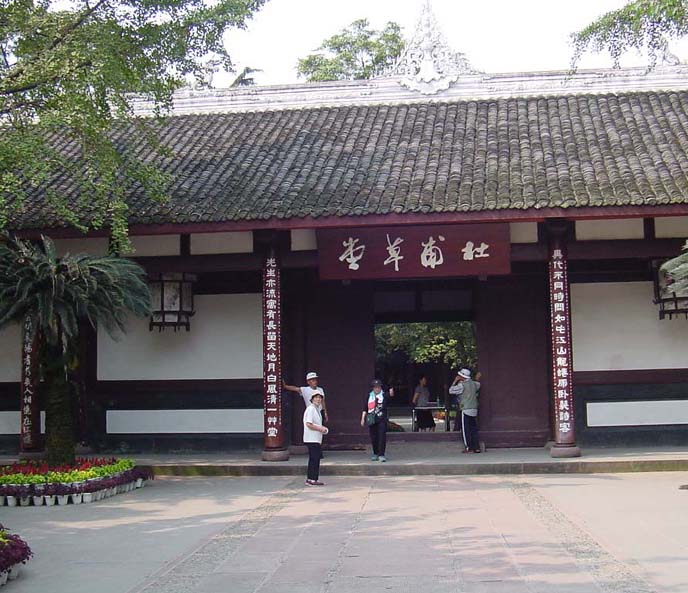
Dufu’s Thatched Cottage, also called the Huanhua Cottage, Gongbu Cottage or Shaoling Cottage, is located in the side of a stream called the Huanhua in the west suburbs of the Chengdu city of Sichuan province. It is nowadays a Dufu’s Thatched Cottage museum in honor of the great realism poet Dufu in Tang dynasty in China. It was the residence of Dufu when he reached Chengdu and was rebuilt and protected by the later generations.

Dufu, a famous representative of the realism, lived in the turning period from the prosperous to the decline in the Tang Dynasty. His poems are characterized by the archaism, eight lines, and various styles and depressed feeling to show the historical process of economy of the Tang Dynasty changing from the prosperity to the depression, and it has been called the “Poem History”. He has also been praised as the “Poet Sage” because of his great attainments of his thought and artist for his creation of poems and his glorious achievement. He has written more than 1,400 poems in total.

Dufu's Thatched Cottage

Dufu's Thatched Cottage

Covering an area of nearly 300 hectares, the Dufu’s Thatched Cottage completely maintains the pattern of the Jiaqing period in Qing Dynasty. The gardens inside it are very unique mixed Chinese classical gardens and the museum is divided into 3 parts according to its functions: the cultural relics sightseeing area, the garden sightseeing area and the service area. In the cultural relics sightseeing area, you will see the river winding across the bridge with the bamboo trees surrounding along both banks, which makes it not only solemn, simple and elegant, but also deeply quiet and pretty. The Stele Pavilion “Shaoling Cottage” inside the museum symbolizes the cottage of Dufu, and it has been the symbolic attraction of the Dufu’s Thatched Cottage and the famous attraction in Chengdu.

Travel tips: 1) Opening time: 7:30 a.m. to 19:00 p.m. in summer and 8:00 a.m. to 18:00 p.m. in winter. 2) Ticket price: 60 RMB/ adult. 3) Ways to get there: take the city buses No. 208, 82, 59, 35, 170, 58 and 165 to the Dufu’s Thatched Cottage stop.

Giant Panda Breeding and Research Base


Giant Panda Breeding and Research Base

Giant Panda Breeding and Research Base

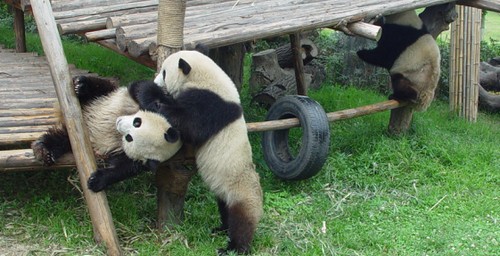
Located in the Futoushan Mountain of the north countryside in Chengdu city with 15 kilometers away from the city center, the Giant Panda Breeding Research Base is a non-profit organization specializes in the area of the research and breeding of the endangered wild animals , protected-education and tourism education. Covering an area of 1,000 hectares with 96% green coverage ratio to create the ecological environment for the breeding of giant pandas and variously rare wild animals, the panda avenue of the Giant Panda Breeding Research Base is connected with the city center; it is the important place for the protection and migration of the giant pandas in China.

The panda museum has a plenty of precious data and information and rich exhibitions about the giant pandas, which makes it a perfect place for people to know more about the giant pandas, return back to the nature, have sightseeing tour and enjoy the leisure and entertainment. Surrounded by the flourish bamboo and green trees, decorated by the sweet flower and enjoyable birds singing and overspread by the fresh air, the Giant Panda Breeding Research Base is an ingenious combination of the natural mountains scenery and the exquisite artificial landscape, which worthy your visit. And valuable endangered animals such as the giant panda, the small panda, and the black-necked crane leisurely breed here. Traveling here, you’ll find the giant pandas lying, sitting, drinking, playing, going out or in; each is in its proper place, so fascinated and intoxicated!

Giant Panda Breeding and Research Base

Giant Panda Breeding and Research Base

Travel tips: 1) Opening time: 8:00 a.m. to 18:00 p.m. for all the year round. 2) Ticket price: 58 RMB / person. 3) Ways to got there: take the city public buses No. 1, 49, 53, 63, 64, 69, 71 and 83 to the Qinglongchang bus center station and then take the No. 198 or 87 public bus to the Giant Panda Breeding Research Base; or just take taxi directly to the Giant Panda Breeding Research Base with the price of 30 RMB. 4) Durations: 3 hours for walk visiting and 1-1.5 hours for electro mobile car with the price of 10 RMB.
Guiyuan Buddhist Temple


Guiyuan Temple

Guiyuan Temple

Located in the Wuhan city, the Guiyuan Buddhist Temple is a national key Buddhist Temple built by two Buddhists Biguan and Zhufeng. It was finished in the year of 1658 with a history of more than 300 years and it has been the site of Hubei Buddhist Association and Wuhan Buddhist Association nowadays characterized by towering old trees, lush flowers and trees, clear hot spring and green water, and winding path.

Guiyuan Temple

Guiyuan Temple

The Guiyuan Buddhist Temple is divided into 5 courtyards: east courtyard, west courtyard, south courtyard, north courtyard and middle courtyard and it covers an area of more than 20,000 square meters. There exists 28 palace halls and pavilions, whose plane layout shows the “ cossock” shape, and this is what it is different from other Buddhist Temples. Inside the Guiyuan Buddhist Temple, there are three main architectures: the Depositarry of Buddhist Texts, the Mahavira Hall and the Hall of the Arhats. The Depositarry of Buddhist Texts in the north courtyard is a pavilion-style archecture with two sides with its height 25 meters. The whole architectural looks exquisite, majestic and glorary. There are a plenty of the Buddhist relics in the Guiyuan Buddhist Temple, apart from the depositarry of Buddhist, there are also figure of Buddha, Res divini iuris, stone carvings, stone inscriptions of painting and calligraphy and foreign language books. It is one of the Buddhist Temples which store plenty of figures of Buddha. There is a figure of Buddha whose weight is more than 1 tone made of jade stone set here, and there are only 3 figure of Buddhas of this kind in China, others are in Beijing and Shanghai.

Guiyuan Temple

Guiyuan Temple

Guiyuan Buddhist Temple, together with the Baotong Temple, Xilian Temple and Zhengjue Temple, are the famous 4 temples in the area of Wuhan Buddhist, which worthy your visit. So, just make your plan for Wuhan tour including the Guiyuan Buddhist Temple.


Ideal Hotels for Your Tour in Shanghai


Hyatt on the Bund

Hyatt on the Bund

Shanghai, a metropolis in China and a must-go city for almost every foreigners, features so many famous attractions such as the Yuyuan Garden, the Band, the Zhujiajiao Water Town, the Shanghai Urban Planning Exhibition Hall, Oriental Pearl TV Tower, Xintiandi etc. to make you tour here fulfilled and wonderful. I’m sure you are eager to have a visit to all of these famous attractions within your 2 or 3 day Shanghais tour, right? If so, in order to be energetic and excited all the time to meet all these beautiful scenery, what you have to do is choose an ideal and comfortable hotel which will make you have sweet night and enjoyable stay. Here are some recommended hotels for you to choose from for your Shanghai tour.

Pudong Shangri-La

Pudong Shangri-La

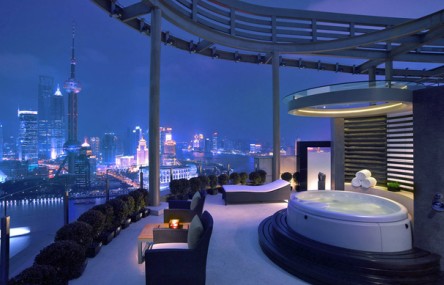
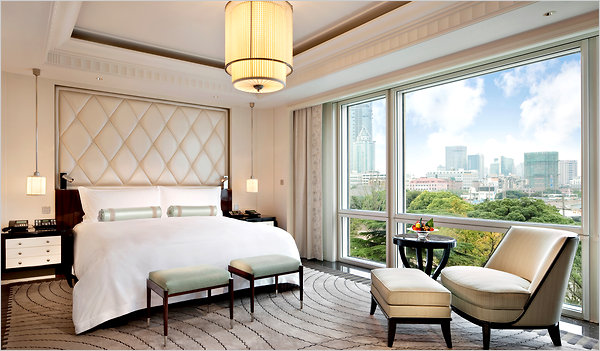
For those how want to enjoy the incredible views in the bathtubs, Pudong Shangri-La and Hyatt on the Bund are the best choice. Pudong Shangri-La is located amidst the Lujiazui Financial and Trade Zone and features various high-standard equipment and recreational facilities such as two state-of-the-art fitness centers boasting a gymnasium, Spa swimming pool, sauna, tennis court, luxurious CHI and steam bath. Moreover, you will enjoy the spectacular views of the Huangpu River, Lujiazui, the Oriental Pearl Tower, the historic Bund and the surrounding Pudong skyline from the window of your room when staying in the bathtubs there. Hyatt on the Bund, also features a Yuan Spa and other various recreational facilities such as indoor swimming pool and a well-equipped fitness facility, is also a good choice for you to enjoy the fascinate view in your hotel bathtubs. Appreciate the majestic panoramic views of the Bund and Pudong across the Huangpu River when having a shower in bathtub, so amazing!

the Peninsula Shanghai

the Peninsula Shanghai

Besides, the Peninsula Shanghai, the Grand Hyatt Shanghai and Park Hyatt Shanghai are also good considerations for your Shanghai tour. For the Peninsula Shanghai, you will enjoy the beautiful view of the Bund, Lujiazui skyline and Huangpu River and have a comfortable stay here at a affordable price at the same time; Staying in the Grand Hyatt Shanghai, the stunning views of the Bund, the grand oriental pearl TV Tower, and the surrounding space-age skyline will make your stay here wonderful and comfortable, and you can also get an easy access to the Yu Gardens and Century Park; When comes to the Park Hyatt Shanghai—the world’s highest hotel situated near the Shanghai World Financial Center, you will have an unparalleled bird’s eye views of the whole city easily from its lofty heights, which will make your stay here unforgettable and unbelievable.

Grand-Hyatt-Shanghai

Grand-Hyatt-Shanghai

Comfortable stay will make your trip much more enjoyable and easy, so, just choose the suitable one for your tour in Shanghai; I’m sure you will enjoy yourself in this beautiful metropolis.

First Bridge over the Yangtze River


First Bridge over the Yangtze River

First Bridge over the Yangtze River

Built in September 1955 and completed in October 1957, the First Bridge over the Yangtze River in Wuhan city is the first bridge connecting the the south Yangtze River and north Yangtze River in China and the first bridge over the Yangtze River features both railway and highway in China also. The Wuhan Yangtze River Bridge is composed of two parts: the highway in the upper floor with 18 meters wide and the railway in the down floor whose length is 1670 meters in total, among which the main bridge is 1156 meters long, the Hanyang band part totals 303 meters length and Wuchang band part 211 meters length. And the bridge features 2 bridge abutments, 8 mounds and 9 holes with the span of every hole 128 meters.

First Bridge over the Yangtze River

First Bridge over the Yangtze River

Stretches over the She mountain and the Hanyang Gui mountain, the Wuhan Yangtze River Bridge is a majestic bridge showing the cohesion of the ingenuity of talent and the exquisite skill of the designers at that time. Walking around there, you will view the comely scene reflecting from the Wuhan Yangtze River Bridge, and the 35-meter-high bridge abutment standing in both bands makes the bridge much more magnificent. You can see the a slice of the beautiful sites here such as the Qingchuan Pavilion, Gui Mountain, Lotus Lake, She Mountain and the Yellow Crane. All of them are connected with each other to make up a unbreathing scene in front of you so as to make your Wuhan tour unforgettable.

First Bridge over the Yangtze River

First Bridge over the Yangtze River

Advice: Walk across the bridge at night especially when you see the river from the Yangtze River if you want to get the best view of the Wuhan Yangtze River Bridge , where you can see the buildings below you , the ships on the river far below, a tall antenna tower on the Hanyang band.

« Older posts Newer posts »

© 2026 China Yangtze.com

Theme by Anders NorenUp ↑