China Yangtze.com

China Yangtze River Information: cruises, maps, pictures, ships, three gorges dam.

Page 15 of 72

Xin An River


Xin An River

Xin An River

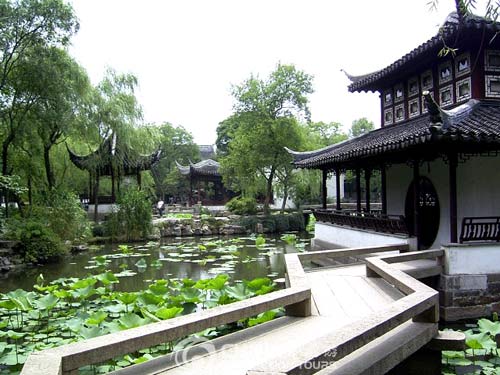
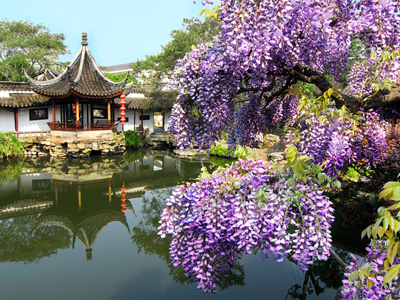
Xin an River, originated in Huizhou of Anhui Province, passes through the Chunan County and Jiande city and then pass by the Tonglu county in the east direction to the Fuyang city, and continue to the Qiantang River in east. Fuan River, Xin An River and the Thousand Islets Lakes set in the important scenic area in Zhejiang province, whose upstream is Chun An city and downstream is Fuyang city. With the Length of 373 kilometers and drainage area of 11,600 square kilometers, the Xin An River is approved by the state council and listed in the first list of state-level scenic spots.

Xin An River

Xin An River

Xin An River is famous for its scenery and water. The water there is clear enough during the four seasons, where you can see its bottom easily. The mountains is winding, and green hillocks are overlapping in both sides of the river, whose landform of the different state and numerous valleys with waterfall flowing. Being an national level attraction, the Xin An River enjoys the reputation of “Cool World” and it is a world-famous “road of Tang poetry”. Thanks to the formation of the Thousand Island Lake, the Xin An River maintains at 12-17 degrees Celsius throughout the year, which forms the unique climate “ warm winter and cool summer”, and you will feel the Xin An River as a huge bridge in burning hot summer. This a beautiful scenic spot with mountains on both sides whose characteristics are green and clear river between landscape and also there are many places of interest.

Xin An River

Xin An River

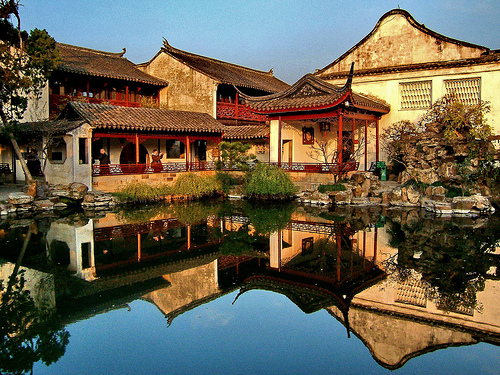
Xin An River basin has a long history in the form of folk customs, and it has been the value of folk tourism resources. Traveling along the river, you will find the village group with white walls and green tiles which are among the green shade. Bridges, pavilions and towering trees are integrated together to form sceneries of their own; the bluestone road, wooden door, mixed type pavement is visible, whose ancient style still exist. You can have a visit to the local family to experience the simple rural life there.

Tunxi Old Street


Tunxi Old Street

Tunxi Old Street

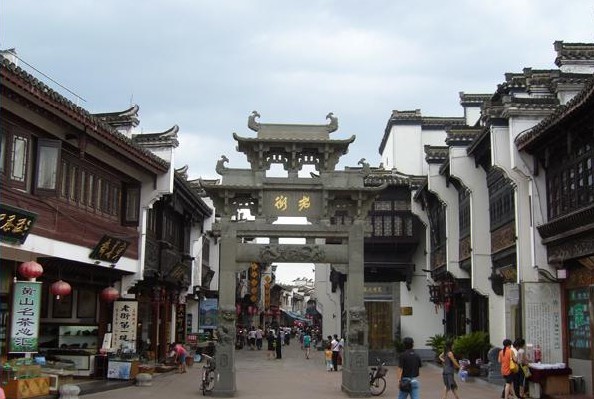
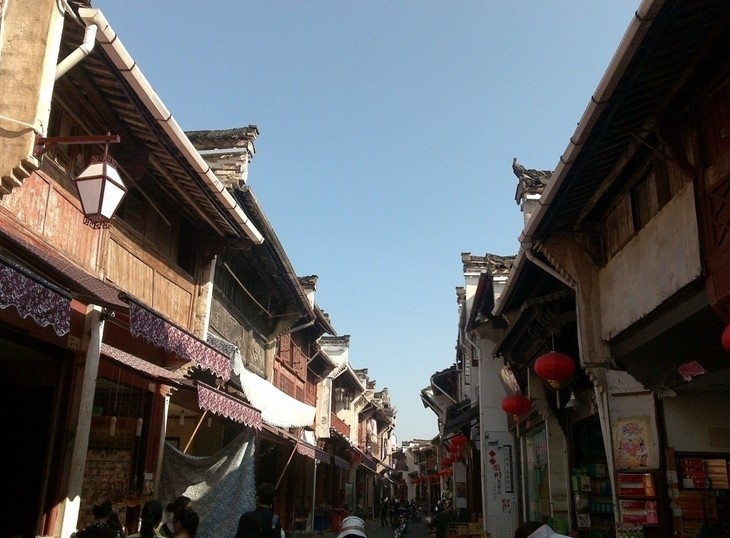
Located in the center district of the Tunxi area in Huangshan city, the Tunxi Old Street is surrounded by green hills and blue waters, with its north is green Huashan Mountain for four seasons and south is year-round-blue Anxin River. It is called the flowing Riverside Scene at Qingming Festival. Featuring a history of more than hundreds of years, the Tunxi Old Street totals 832 meters long and 5-8 meters wide, it is the most protected pedestrian business street characterized by the Song, Ming and Qing dynasty architectural style.It has been the national key cultural relics protection unit and also the famous Chinese historical and cultural street in 2009.

The special teahouse, wine houses,story-telling houses, ink houses in the Tunxi Old Street has attracted numerous tourists from home and abroud for sightseeing and shopping. As the only national history protection block in China, it attracts nearly 6 million tourists from home and abroad every year. The building groups there not only come down the style of the Song Dynasty, but also inherite the traditional architectural style and planning layout of the Huizhou dwellings with the bright characteristic of the Hui style architecture: white wall, Chinese-style tile, rows of horse-head walls, quietly elegant of primitive simplicity. Street buildings there mostly are front shops and back lanes, front shops and back storehouses, front shops and back dwellings, which show the charm of the Jiangnan ancient towns. Walking along the street, you will also find the Tunxi Old Street narrow and deep with its pavement is all maroon hemp tablets.

Tunxi Old Street

Tunxi Old Street

The Tunxi Old Street is not only intact, but also well scaled. It is the important symbol of the business street in Huizhou. In addition, the advantage of neighboring the Yellow Mountain makes the Tunxi Old Street the most important cultural supplement products of the Yellow Mountain. Appreciating the ancient buildings with the styles and characteristics of local-style dwelling houses in Song dynasty, you trip there will be fantastic!

Shanghai Delicious Food—Do not Miss Them!

Having experienced the wonderful Yangtze River, you will reach the prosperous metropolis—Shanghai! That’s right! It is an amazing city in China that features beautiful scenery, wonderful nightlife and also delicious food! It will undoubtedly be an enjoyable and perfect trip in China to taste the delicious and local Shanghai cuisines after appreciating the thrilling Yangtze River cruise. So, here just follow me to find out the tasty Shanghai food so as to satisfy your appetite!

Shanghai Xiaolongbao

Shanghai Xiaolongbao

For those tasty Shanghai foods, what should be recommended to you are the “Shengjianbao” and “Xiaolongbao”. The Shengjianbao is a kind of breakfast of buns including Shengjian Mantou and Guotie, when you eat you should dip them into black vinegar or soy sauce. In addition, the Luobo Sibing or those pancake stuffed with radish strips are also most popular and favorable breakfast preferred by those local residents. For the Xiaolongbao, also known as dumplings, is another kind of delicacy in Shanghai. When eating it, you will find it a kind of steamed bun full of pork or minced crab and even soup. Here is a common way to taste it, that is, bite the top off, suck all the soup, then dipping it in vinegar before eating—it is really tasty!

Shanghai Shengjianbao

Shanghai Shengjianbao

Besides the Shengjianbao and Xiaolongbao, what will also be highly recommended is the seafood there. Yes, of course the crawfish and hairy crab. These two kinds of seafood are so popular among the locals in summer which will cool you down in the high temperature in Shanghai.Just go and visit the Tongchuan Lu seafood market strip, where you can test and refine your haggling skills. Choose your lovely and favorite seafood there and take them to any restaurant there, where the chefs will make it delicious for your meal.

If it is the spring time when you travel to Shanghai, do not miss the Niangao there. It is soft and chewy and stir-fried with leeks and pork, or for special occasions mixed with pieces of hairy crab in a sweet brown concoction—it is really delicious which worthy your taste.

Xidi Village


Xidi Village
Xidi Village

Being an AAAAA level scenic area, the Xidi Village is located in the south foot of the Yellow Mountain with about 40 kilometers away from the Yellow Mountain Scenic Spot. It was built firstly in North Song Dynasty, developed in Ming Dynasty and prospered in early Qing Dynasty with a long history of nearly 960 years. Though it has experienced hundreds of years of social upheaval and attack of wind and rain and more than half ancient dwellings, ancestral halls, academies, memorial arches have been destroyed, there still keeps hundreds of ancient dwellings and maintains the basic features and characteristics of the villages of the Ming and Qing Dynasty on the whole. The building and the pavement were paved with marble and two spring rivers pass through the whole village, moreover, its 99 walls and deep lanes make the travelers walk as into maze.

Characterized by long history, simplicity and elegance and beautiful landscape, the Xidi Village was listed as Anhui province key cultural relics protection units in 1986 and also listed as world cultural heritage list in the year of 2000. It has attracted numerous travelers from home and abroad, among which including state leaders such as Jiang Ze Ming and Zhu Rong Ji. The Xidi Village is praised as the connection point of ancient and modern Chinese history and also the ancient residential architecture art treasure house. The style of its streets, ancient buildings and ornamentals and dwellings with complete water supply system are very unique cultural heritages.


Xidi Village

Xidi Village

Xidi Village features north subtropical humid monsoon climate: long winter and summer and short spring and autumn. The climate there is mild and humid—abundant rainfall and fresh air. It is not severe cold in winter and not hot and heat in summer with the average temperature of 3.7℃ in its coldest month and the average temperature of bellow 27.1℃ in the hottest month. Therefore, best time to visit the Xidi Village is autumn, especially in November.

Travel Tips: 1) Ticket price: 104 RMB/adult. 2) Opening time: 24 hours. 3) Playing time duration: 5 hours. 4) Best time to visit: spring and autumn time as temperature then is moderate and scenery is the most pleasant.

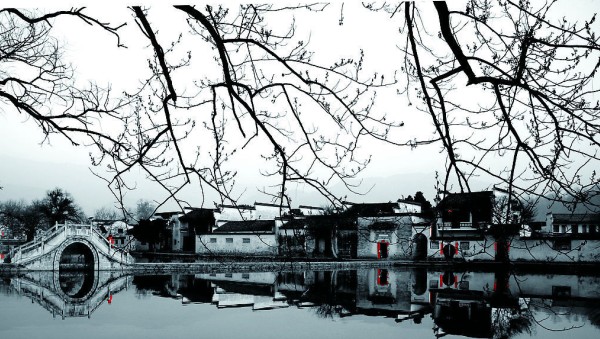
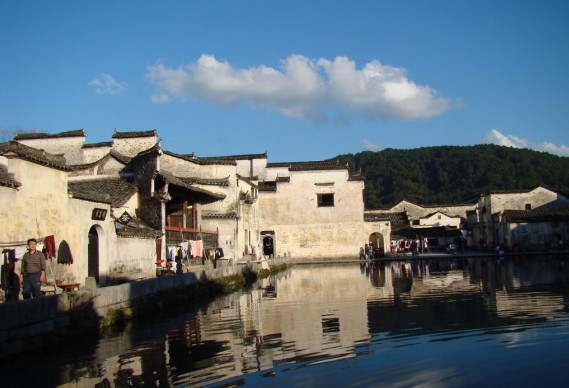
Hongcun Village

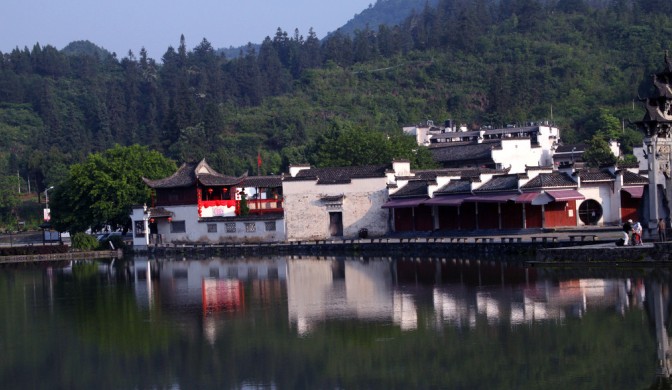
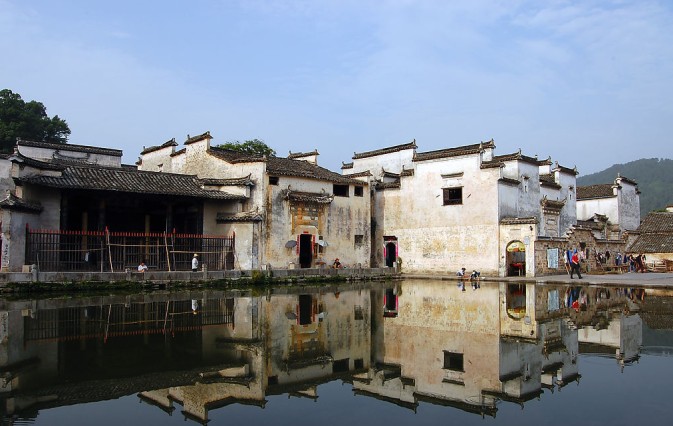
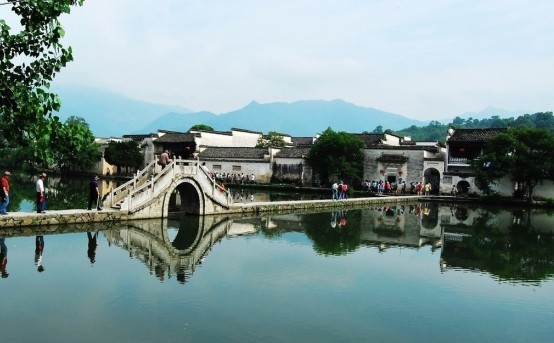
Located in the northwest foot of the Yellow Mountain with 11 kilometers away from the Yixian County, the Hongcun Village is a peculiar ancient village in the ancient Yi peach garden showing as the cattle shape. Covering an area of 19.11 hectares, the Hongcun Village has a history of 900 years. The whole village was built relying on the mountains and along water, and the green mountains in its back is its protective screen to leave the village clear and refreshed topography and keep off the strong wind from the north side to make it avoid the danger of the strike of mountain torrents break out and also offer tourists ideal place to enjoy the fun of beautiful mountain scenery and fair spring sound.

Hongcun Village

Hongcun Village

Walking around the Hongcun Village, you can sense the spirituality of water in the village. Its high topography leaves the poetic scenery in front of you, which makes the Hongcun Village a combination of natural landscape and humanistic landscape, and it is honored as the village in the picture. The Hongcun Village features different scenery in different seasons, whose people, architecture and landscape are in harmony. People there feel like walking in the picture and the Hongcun Village is the shining example of the combination of human and nature.

Hongcun Village

Hongcun Village

The main architectures of the Hongcun Village are residences and private gardens, besides, there are also some other communal facilities such as Ancient Academy and ancestral halls, whose construction group is complete. All kinds of buildings pay attention to sculpture decoration including wood carving, tile carving, stone caving of exquisiteness and elegance full of high artistic value. The village streets mostly built along water and its dwellings are mainly distributed along and around the lunar palus. When have a travel there, just appreciate the unique ancient buildings there and enjoy its beauty!

Hongcun Village

Hongcun Village

Travel information: 1) Opening time: 24 hours; 2) Ticket price: 104 RMB/adult; 3) Duration: 1 day; 4) Best time to visit: March-April and November as you can appreciate large area of rape flower, and green hills and blue waters during March to April and view the beautiful red autumnal leaves in early November.

Yellow Mountain

The Yellow Mountain, located in the south of the Anhui province is the Taoist Holy Place with a plenty of site and relic. It is one of the ten famous mountains in China enjoying the reputation of “ No.1 Strange Mountain under the Heaven.” Yellow Mountain is the most beautiful and one of the impressive ten famous mountains in China, famous summer resort, national scenic spot and health resort in China, it has listed as one of the “ Top Forty Tourist Resorts in China” and one of “ the National Top Ten Scenic Spots” in 1985 and listed in the world cultural and natural heritage list by UNESCO in 1990 and listed as World Geo Park in 2004.

Yellow Mountain

Yellow Mountain

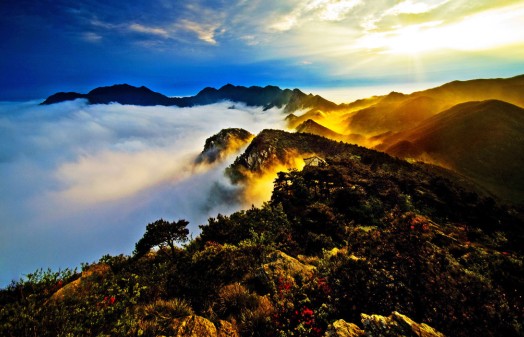
As a famous attraction in China, the Mount Yellow is the only one attraction in China that possesses two top world crowns: the world cultural heritage, natural heritage and the World Geo Park. Located in the subtropical monsoon climate zone with high mountain and deep valley, the climate there shows vertical changes, whose main characteristic are much cloud and mist, heavy humidity and much precipitation, all of these make the scenery there beautiful and wonderful.

Yellow Mountain

Yellow Mountain

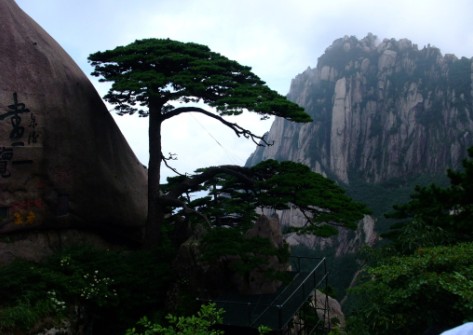
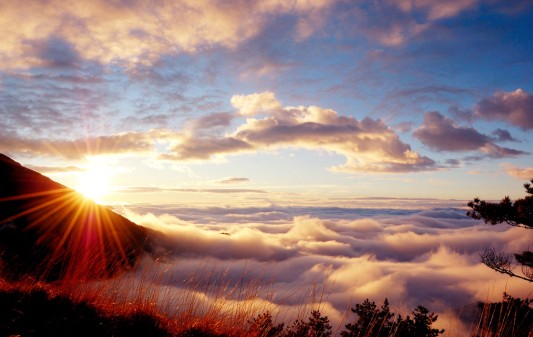
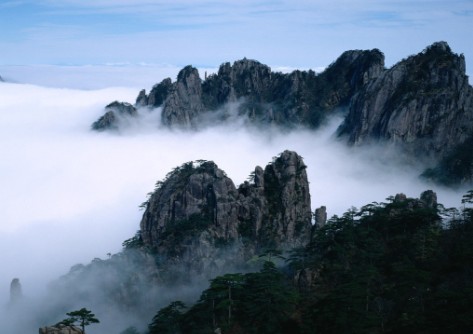
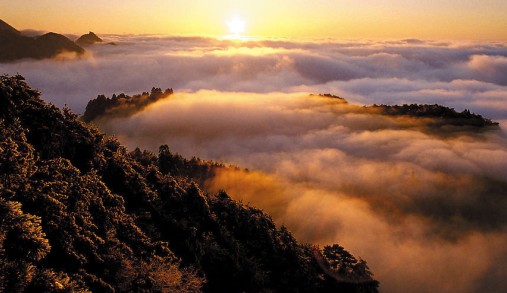
There are four wonders in Yellow Mountain: odd pines, strange stones, sea of clouds and hot springs, which are the four unique landscape there. The pines there are the variants made by the unique landform and climate of the Yellow Mountain; the strange stones are famous for its oddness and its large number; the sea of cloud, however, you can view its best scenery in winter; its hot springs, also called the soup spring, can be drunk and also can be bathed.

Yellow Mountain

Yellow Mountain

Travel information: 1) Opening time: 6:30 a.m. -17:00 p.m. and the ropeway running time is 08:00 a.m. -16:00 p.m. in winter time and 06:30 a.m. -17:00 p.m. in other seasons. 2) Ticket price: 230 RMB/ adult in the peak season from 1st March to 30th November and 150 RMB/ adult in slack season from 1st December to 28th February. 3) Duration suggestion: 2 days. 4) Best time to visit: all seasons are suitable: in spring time from March to May you can enjoy the all kinds of flowers blooming and pine sprouting and birds singing; in summer time from June to August you can view the pine, the cloud and mist and cool yourself there; in autumn time from September to November you can appreciate the green pines, pale stone, red maple and yellow chrysanthemum there; in winter time from December to February you can see the ice, snow flower and fog pine there.

Mount Lu Scenic Area


Mount Lu Scenic Area

Mount Lu Scenic Area

Mount Lu Scenic Area, also called Kuang Mountain or Kuang Lu Scenic Area, is a famous mountain located in the Jiujiang city of the Jiangxi Province, standing erectly near the plains of the middle and lower reaches of the Yangtze River and the Panyang Lakes and also extending for 25 kilometers long and 15 kilometers wide from the northeast to southwest and stretching among more than 90 peaks.

Being an AAAAA level scenic spots in China, the Mount Lu Scenic Area is one of the developments to the Chinese civilization. The Buddhism and Taoism temple here are on behalf of the White Deer Cave Ancient Academy of the neo-Confucianism idea and on behalf of the Guanyin Bridge of the high-tech architecture in ancient times, and it integrates into the natural beauty of outstanding value by its unique way so as to form into one of the cultural landscapes with high aesthetic value and closely contact with the Chinese national spirit and cultural life. It is one of the Four Major Summer Resorts in China together with the Jigong Mountain, Beidaihe and Mogan Mountain.

Mount Lu Scenic Area

Mount Lu Scenic Area

Those tall and straight and green mountains, spraying-snow-and-sound-ray like silver springs and plunging waterfall, rapidly changing sea of clouds, beautiful and spectacular and exquisite garden architectures, cloud and mist of all the year round, and all kinds of strange stones and pines and most of all the spring-like cool climate in the midsummer make the Mount Lu Scenic Area a ideal place for travelers from home and abroad yearning to have a visit—it is most famous scenic spot and summer resort in China.

Lushan region is rich in water resource and it has a wealth of precipitation, surface water and groundwater, besides, it is rich in biological resources with the forest coverage rate of 76.6%; most of all, it features moderate climate with the cool summer and not so clod winter and the characteristic of its season is late spring, short summer, early autumn and long winter.

Mount Lu Scenic Area

Mount Lu Scenic Area

Travel information: 1) Opening time: 6:00 a.m. – 20:00 p.m. 2) Ticket price: 180 RMB/adult in peak season and 135 RMB/adult in slack season. 3) Duration suggestion: 3 days. 4) Best time to visit: summer time as it is very cool at that time.

Lingyun Mountain


Lingyun Mountain

Lingyun Mountain

Located in the Leshan Giant Buddha scenic area, the Lingyun Mountain is an AAAA level attraction in China and a national forest park and Lingyun mountain scenic spot of Gao Ping area in Nanchong city of Sichuan Province. It was honored as one of the best scenic spots for the 60th anniversary of the founding of the new China in the year of 2009.

Lingyun Mountain is 562.6 meters above sea level, and it is characterized by the unique geomorphology of Green Dragon in left, White Tiger in right, Vermilion Bird in front and Sable Serpent in the back. The landform there is continuous with the towering trees. You will experience its “grandness, oddness, danger and quietness when you have a climb there. The Lingyun monastery in its mountaintop was built in the end of Han dynasty, and the Zhenwu Palace remaining there was rebuilt in the Qing Dynasty, featuring Yuxian Hill, Xiangmo Stand, Laojun Cave, Old Dragon Cave, Wangfu Cliff, Sheshen Cliff, General Tomb and other natural wonders, enjoying the reputation of “ Fruit County Soul Mountain.”

Lingyun Mountain

Lingyun Mountain

Covering an area of near 20 square kilometers, the Lingyun Mountain scenic area sets Lingyun Mountain Taoism City, Baishan Buddhism City, Tushan Confucian Culture Center as its main body. The traditional culture of the Lingyun Mountain has a long history, which makes it be a Buddhist attraction for a long history since Tang dynasty, where you can view a plenty of monasteries there. What’s more, there is a temple complex newly built on its top which contains hundreds of statues, from where you can appreciate the wonderful view of the Leshan Giant Buddha.

What make the Lingyun Mountain famous is its geomantic geography, geomorphology of the mountain shape, monastic temples, stone carving art and good natural ecology. It is really a good place for you to visit during you tour to Mount Emei, especially for those Buddhists.

Leshan Giant Buddha

Being an AAAAA level scenic spot, the Leshan Giant Buddha, also called the Lingyun Giant Buddha, is located in the infall of the Minjiang River, Qingyi River and the Dadu River, facing the Leshan city in the other side of the river. Leshan Giant Buddha was caved in the crags of the infall of the three rivers and it is a Maitreya Buddha statue in the cliff of the Lingyun Mountain along the south band of the Minjing River. It is one of the art boutiques of the inscriptions statues in Tang Dynasty and the biggest stone carvings Maitreya Buddha statue in the world.

Leshan Giant Buddha

Leshan Giant Buddha

The Giant Buddha sits in the square and serious posture with his hands on his knees, whose appearance looks so solemn. With the exquisite and clever design, the drainage facilities of the Giant Buddha are implicit and invisible.

Leshan Giant Buddha

Leshan Giant Buddha

The Leshan Giant Buddha scenic area is composed of Lingyun Mountain, Wulong Mountain, giant sleeping Buddha landscape etc. Covering an area of 8 square kilometers and belonge to the Mount Emei scenic area, the Leshan Giant Buddha is a famous scenic area that has attracted a plenty of travelers from home and abroad. There goes a saying for Leshan Giant Buddha, “Go up for Mount Emei and go down for Lingyun Mountain.”

Leshan Giant Buddha

Leshan Giant Buddha

With its height of more than 70 meters and 20 meters higher than the biggest standing Buddha statue in Afghanistan, the Leshan Giant Buddha has been sitting here quietly for thousand years, watching the river running in front of it and seeing the world changing.

Travel tips: Opening time: 7:30 a.m. -18:30 p.m. in peak season during 1st April to 7th October and 8:00 a.m.-17:30 p.m. during the slack season from 8th October to 31st March; 2) Ticket price: 90 RMB/ adult including the ticket prices of the Leshan Giant Buddha, Wurao Temple and Mahaoya Tomb. 3) Duration: 4 hours. 4) Best time to visit: all the year round.

Emei Mountain


Emei Mountain

Emei Mountain

Emei Mountain, located in the Emei city of Sichuan province in the southwest of Sichuan basin with 7 kilometers away from the Emei city center in the west and 37 kilometers away from the Leshan city center in the east, covers an area of 154 square kilometers, whose peak is 3,099 meters above the sea level. Featuring the steep terrain and the beautiful scenery, the Emei Mountain enjoys the reputation of “ Top Mountain under Heaven.” The climate there is various and the vegetation is rich with a total number of more than 3,000 plants, among which including some rare tree species in the world. There are also many Monkey Folk along the mountain path, which often in droves to tourists to beg for food, and this is one main unique feature of the Emei Mountain.

Emei Mountain

Emei Mountain

Emei Mountain is one of the four great Buddhist mountains in China and also an AAAAA level scenic spot in China, and the Leshan Giant Buddha of the Emei Mountain has been listed in the list of World Heritage Sites by UNESCO as both cultural and natural heritage in 6th, December 1996.

The Emei Mountain is a famous scenic spot that has attracted numerous travelers from home and abroad. It is characterized by grandness, elegance, miraculousness and spectacularity and profound Buddhist culture. It is also famous for its foggy weather as it is always curled up by the cloud and mist all the year round and they are permeated among the mountain with various shapes to make the Emei Mountain very pretty and charming.

Emei Mountain

Emei Mountain

Travel information: 1) Opening time: 6:00a.m. -18:30p.m. during the peak season from 16th January to 14th December and 7:00 a.m. -17:50 p.m. during the slack season from the 15th December to 15th January. 2) Ticket price: 185 RMB/ adult in peak season and 110 RMB/ adult in slack season. 3) Duration: 3 days. 4) Best time to visit: spring time and autumn time as the climate is moderate and the scenery is charming. 5) Best time to appreciate the sunrise is the 5:45 a.m. in summer and 6:50 a.m. in winter; appreciate the sea of clouds and the Light of Buddha in 9:00-10:00 in the morning and 3:00-4:00 in the afternoon; appreciate the rhododendron in the end of April to May and the red autumnal leaves in October; Play with snow and go skiing in November to March.

« Older posts Newer posts »

© 2025 China Yangtze.com

Theme by Anders NorenUp ↑