China Yangtze.com

China Yangtze River Information: cruises, maps, pictures, ships, three gorges dam.

Page 13 of 72

Moganshan Scenic Area

Monganshan or Mount Mogan National Park consists of mount having three peaks and some foothills. It is among some of the top resort places of China. It is best known as a resting and hiking area with plenty of guesthouses where people can rent rooms in well built western style buildings. These buildings have been made when this area was mainly a foreigner enclave before 1948.

Moganshan Scenic Area

Moganshan Scenic Area

This area is dotted with the villas of European style that has been turned into guesthouses. The best things for the tourists is that there are lots of Pine and bamboo forest as well as interesting natural features like the rock formations that you can hike for seeing Chinese style paved footpaths and dirt and stair paths which are cut through the vegetation. The paved path goes to the top where you can see the beauty of the valley of Anji. There are many places where you can hike to in this park. There is a peak called as Ta Shan which is 724 meters or 2375 feet in height.  This is not too much height but you can hike to the top along the paved path. You can also go for hiking to the waterfall and a pond known as Sword Pond.  You can also walk around looking at the villas and houses make of stones. Some of them are really big. You can also identify the various architectural styles like French, British and American.  Some of them look like the European chalets.  One of the highlight is the strange rock formation that some of the people think is weird. It is called as the Guai Shi Jiao or Weird rock corner in Chinese. You can go there by walking along the ridges and you can also get the views of green hills from there.

Moganshan Scenic Area

Yue-Fei-Temple

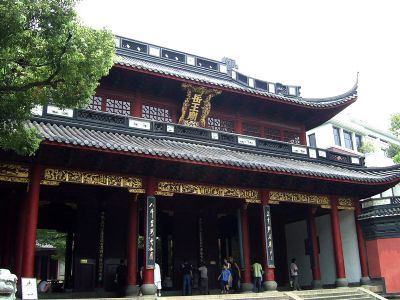
Yue Fei’s Tomb is situated at the Southern foot of the Qixia Hill. This tomb has been build for the commemoration of Yu Fei. In the year 1961, the State Council declared it as the major national protected monument. General Yu Fei was the national hero of the Southern Song Dynasty and distinguished himself in the battle against the northern invaders. He was sentenced to death after he was framed for the crime which he did not commit.

Yue Fei Temple


This tomb is situated on the bank of the Lake Yue the northwest corner of the West lake. The Yue Fei’s temple looks towering and lofty.  It is made up of three parts which includes tomb ground, Devotion Garden and Loyalty Garden. The stature of Yu Fie lies inside King Yue’s Temple and there is a plaque hanging which inscribed in the calligraphy of Yue “Recover Our Lost Territories” right above the statue. The Devotional Garden is dedicated to the parents, wife and sons of Yue Fei and it serves as the Yue Fei’s memorial hall. The tomb of Yue Fei’s gounds situated on the left side of the Loyalty Garden. This tomb is in round shape and built with rocks. There is the tomb of his son besides it. On the Tomb ground’s Screen wall there are four big Charcters caved in Chinese “Be Loyal to the Motherland” which is the life time motto of Yue Fei.

Yue Fei Temple

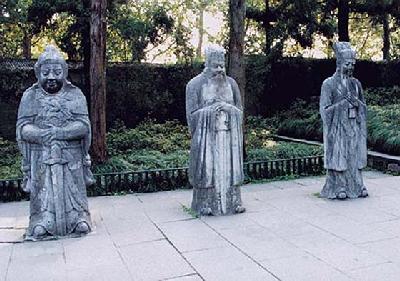
There is a path on both the sides which leads to the tomb and having stone tigers, stone horses, stone figures and stone sheep which dates from the Ming Dynasty. Below the stages of these path there are four cast iron staues of the traitors” Qin Hui, Prime Minister of Sothern Song Dynasty; Wang Shi, his wife; Zhang Jun, a general and Moqi Xie, a court official. All these four statues kneel down in pair and their hands are tied behind their back. There are over 125 carving or steles which includes some poems by some prominent personality throughout history expressing their respect for this nationa hero as well as some Fei’s calligraphy.

libri”,”sans-serif”; mso-ascii-theme-font:minor-latin;mso-fareast-font-family:Calibri;mso-fareast-theme-font: minor-latin;mso-hansi-theme-font:minor-latin;mso-bidi-font-family:”Times New Roman”; mso-bidi-theme-font:minor-bidi;mso-ansi-language:EN-US;mso-fareast-language: EN-US;mso-bidi-language:AR-SA’>


Xixi National Wetland Park

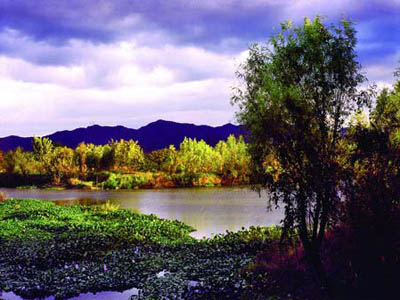
Xixi National Wetland Park is located in the western part of Hangzhou and it is less than five kilometers from the west land and a rare urban wetland. It is a simple natural landscape having rich ecological resources as well as profound culture. It is among the one of the Three Xi’s whih are Xihu or West lake and the Xiling. It is the only and first wetland park of China which combines urban life, culture and farming. It has broad open views and a variety of water views. This area enjoys a warm and humid climate with abundant precipitation and all four distinct seasons.

Xixi National Wetland Park

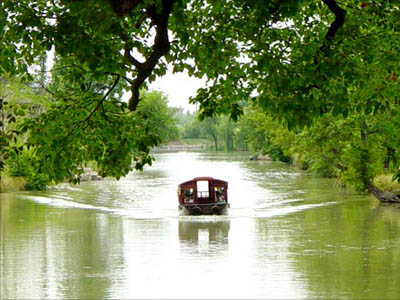
The human and natural landscape of this wetland has been grouped into three causeway and ten sights. The three causeways are Causeway Fu, Causeway Shou and Causeway Lu and according to Chinese there three words fu, lu and shou carry the meaning of prosperity, fortune and longevity. Causeway Fu is about 2,300 meters long, seven meters wide and stretches through the park from south to north. There are six bridges spanning across the bank and named with the Chinese character ’fu’.  Causeway Lu is about 1600 meter long and 7 m wide and stretches through the core reserve area from west to the east. It connects the ecological arboretum having the major scientific research project of the wetland and also serving as an ecological bank. Causeway Shou on the other hand is longest of all three having length of 3600 meter and width of 4.5 meters. Crisscrossing waterways and ancient trees here forms the ecological landscape.

Xixi National Wetland Park

The ten sites are Qiuxue Hut which is the best scenery of this wetland and it can be reached only by the boat; Exhibition of Dragon Boat Culture; Lotus Flower Eco-Reserve area for bird watching; Water Mirroring Red Persimmons; Charm of Hong’s Villa which is the living place of Hongs, Boat rowing in the Moonlight, Fog and Water Fishing Village, Xixi Plum Villa which is the home to plum tree; Gao’s Villa.


Peak Flown From Afar (Fei Lai Feng)

Peak Flown From Afar or Fei Lai Fengs stands next to the Temple of Soul’s Retreat or Lingyin Temple and is one of the Famous tourist sites in Hangzhou in Zhejiang Province. There are many legend related to the name of this peak.  There is a legend that an Indian monk, Huili arrived in this valley about sixteen hundred years ago and was very much impressed by the peak dissimilar from any other valleys and he believed that this peak had flown over from India because of its shape as it was common in India. However, he was unknown from the fact that this peak would have flown to this place far from his country. Hence, this peak is known by this name from that time.

Peak Flown from Afar

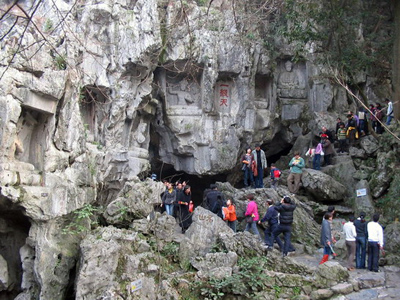
Fei Lai Feng is about 700 feet tall and it is a pure limestone mountain which is very much distinct from the Sandstone Mountains around it. Large stones are scattered along this peak which resembles animals like running elephant, flying dragon, fleeing monkey and crouching tiger. There is a pavilion on the other side o the peak which is called Cui Wei and was erected for immortalizing the national hero Yue Fei. He has contributed greately in the war against the Jin Tribe during the period of Southern Song Dynasty. This pavilion was destroyed many times and finally restored in the year 1942.

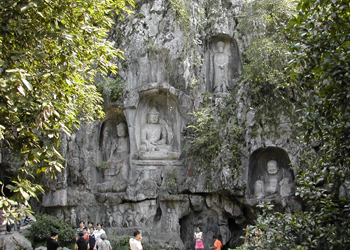
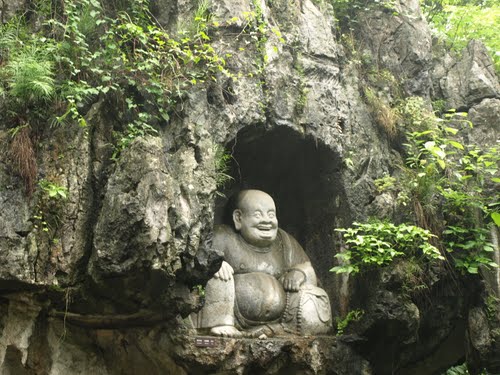
The caves of this mountain are having 330 stones statue which dates back to the 10th and 14th centuries. The statues appear in many poses like standing, sitting and sleeping. There is one statue of Laughing Buddha which sits on the Cliff along the stream with the belly and breast exposed. If you wonder that why he has such a big belly then it is his belly where he keeps all the troubles of the world. This peak has destroyed many villages before settling down in Hangzhou and in order to prevent the peak from causing more damage, more than 500 statues of Buddha has been carved for suppressing it.

Peak Flown from Afar

Temple of Soul’s Retreat (Lingyin Temple)

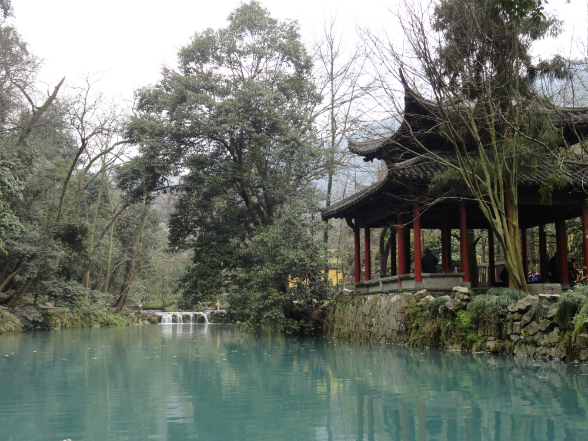
Temple of Soul’s Retreat or Lingyin Temple lies in the long and narrow valley between Peak Flown From Aftar or Fei Lai Feng and the North Peak to the northwest of the West Lake in Hangzhou in the Zhejiang Province. It is a premier showpiece in the environment of West Lake and it is among one of the tem most famous Buddhist temple in China. In the year 1961, it was listed for protection as a key historical and cultural site and considered as one of the leading centers for the research related to Chinese Buddhist culture.

Laughing Buddha at Temple of Soul's Retreat

Laughing Buddha at Temple of Soul's Retreat

This temple is present on this site since the Eastern Jin Dynasty when according to the belief of people a local legend, Huili who was an Indian monk came here and he was inspired by the spiritual nature of the scenery found at this place. In his mind there was a thought that it is dwelled by the immortals so he had named this temple as the Temple of Soul’s Retreat.

This temple gained much importance during the period of Five Dynasties when the king of Wu Yue State initiated a very large scale development of this temple as a sign of his devotion to Buddhism. Presently, this temple has nine buildings, seventy seven palaces, eighteen pavilions and halls having more than thirteen hundred rooms which provide accommodation to around three thousand monks. Such a large monastery is very much difficult to imagine. However, it has been subjected to many changes due to war, natural calamities and religious suppression. The main building present today is a result of the restoration that was being carried out in the year 1974 when there was ten year after the Chinese Culture Revolution. You can see the tablet inscribed with words which was penned by the Emperor, Kangxi of Qing Dynasty. He was very much inspired by the sight of the temple and named it as ‘Cloud Forest Buddhist Temple’ as temple was shrouded in the mist amongst trees.

Temple of Soul's Retreat

Temple of Soul's Retreat

Meijiawu Tea Plantation

Meijianwu is a village community in Hangzhou which is basically a tea culture leisure area and has the many features of tea village. Besides, it is an ideal place for drinking Longjing Green Tea and having the rural meals. Meijiawu Tea Cultural Village has been tucked inside the greenery of mountains and waters which make it a wonderful tourist place. Tea houses join each other at the Snaking tranquil creek and the fragrance of the tea is always in the air.

Meijiawu Tea Plantation

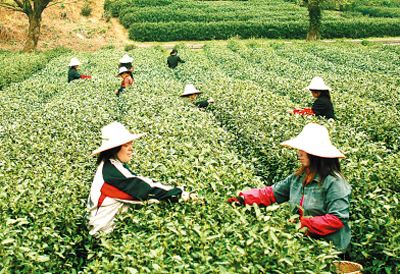
Meijianwu Tea Village is very much reputed for the history of serving the exquisite tea. This village will enable you to experience the pleasures f having a perfect cup of tea and watch many ceremonies of tea which are very much elaborate, sophisticated and interesting. You can select the tea under the supervision of professionals. Chinese teas come in many varieties you might or might not require advice on choosing a particular brand. Dragon Well tea or Longjin Tea is known as the best green tea in china and it is one of the best qualities of tea in China. The agricultural fields are picturesque in China just like the terraces and rice paddies. The plantation of tea in the Meijiawu village is just as good as then if not the best. Neat row of tea bushes are planted along the hillside. Meandering soil paths, just look like brown thread which sew the pieces green together. Villagers pick up the tea sprouts in their widely brimmed straw hats.

Meijiawu Tea Plantation

The Langdang Mountain, the Premier Zhou Enlai Memorial Hall and Ligeng hall are some of the cultural demonstrative venues in the village and the Zhou Enlai Memorial hall has been renovated carefully. Ten miles Langdang lane has also become tidier and wider. The 11 stone bridges represent the traditional culture of Chinese atmosphere in the Meijiawu as well.


Beijing-Huangzhou Grand Canal

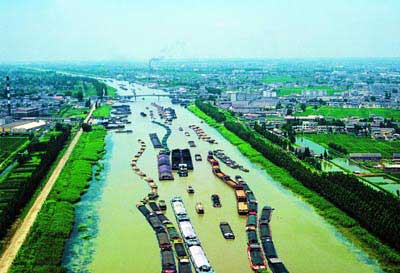
Beijing-Huangzhou Grand Canal or the Grand Canal is the oldest and longest canal of the world and surpasses the Suez and panama Canals which are the next two giant canals. This canal stretches from Beijing in the North to the Hangzhou which is the capital of Zhejiang Province in the South. In its journey, it flows through Beijing, Hebei, Tianjin, Jiangsu, Shandong, Zhejiang Provinces and the way for interconnecting the five rivers that are Yellow, Haihe, Qiangtang, Huanhe and Yangtze Rivers.

Beijing-Hangzhou Grand canal

This Grand Canal was one of the greatest engineering projects of ancient China. It is also very precious human heritage which is left by the ancestors. In the year 604 AD, the Emperor of Sui Dynasty, Yangdi left his capital city of Changan which is today known as Xian. He cruised to the Luoyang City which interested him and the next year he moved his capital to Luoyang and ordered to build the Great Canal. After six years and efforts of thousands of laborers, many small canals were connected to form the Great Canal which is about 1,764 kilometers in length. Since then, the Great Canal has played significant role in the history, transportation of goods and foods from south to north China and promoted the defense as well as administration of China and strengthen the cultural and economical exchange between the North and South in China.

Beijing-Hangzhou Grand canal

The Grand Canal illustrates the advance technologies of shipping and water conservancy of ancient China and has given birth to many famous towns and cities. Along with the Great Wall of China, it is very much reputed and one of the two magnificent projects of the ancient China and thus it is renowned worldwide.

If you want to enjoy the attractive scenery of this Great Canal then you can take a boat from the old Chinese Canal. You will get the landscapes of the typical river towns of southern China as well as stone bridges and ancient dwellings of traditional designs and historic relics. You can also get the some delicious foods and experience the great culture.


Wuzhen Water Town

According to the Chinese people, unless you visit the Great Wall of China you have not been to China. So, if you are visiting south of the Yangze River then you should not miss the Water town of Wuzhen.

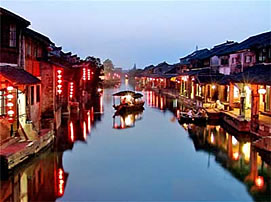
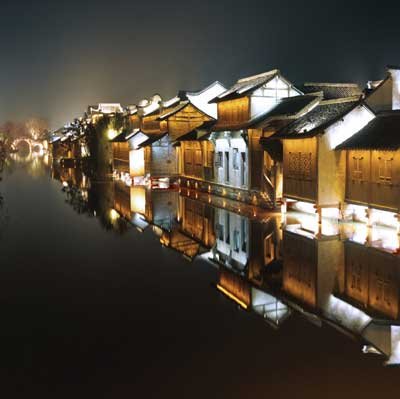
It is located in the centre of the six ancient town which is to the south of Yangtze River and approximately 17 kilometers to the north of the city of Tongxiang. This water town has over two thousand years of history having ancient stone bridges floating on the mild water and stone pathways between dedicate wood carvings and mottled walls.  It is a unique water town and has profound cultural background.

Wuzhen Water Town

It is also said that the people have been living here for more than seven thousand years and over time it has produced a number of talents. Mao Dun, one of the outstanding writers of modern China was born here and ‘The Lin’s Shop’, one of his masterpieces describes the vivid life of this area. Wuzhen, in the year 1991 has been authorized as the Provincial Ancient Town of Culture and history and also ranked first among the other six ancient towns of the south of the Yangtze River.

The layout of this town makes it unique and it is tow kilometers long and has been divided into six districts. They are Traditional Local Styled Dwelling Houses District, Traditional Workshop District, Traditional Food and Beverage District, Traditional Culture District, Traditional Stores and shops District and Water Township Customs and Life District. You will enjoy the original ancient and traditional cultures while wandering along the east-west-east Circuit that have been well preserved till date.

Wuzhen Water Town

Some of the noted sites to see there are Former Residence of Mao Dun which was the former residence of the revolutionary writer of China, Mao Dun and the Fanglu Pavilion which is famous for tea.


Six Harmonies Pagoda (Liuhe Pagoda)

The six Harmonies Pagoda is situated on the Yuelun Hill which overlooks the Qiantang River and lies to the south of West Lake. It is one of the masterpieces of the architecture of ancient China. This pagoda was originally built during the period of Northern Song Dynasty by the ruler of Wuyue state and a part of which became the Zhejiang Province. The name Liuhe comes from six Buddhist ordinances and it is believed that this pagoda was build in order to clam the tidal waters of the Qiantang River for aiding navigation. In the year 1121, this pagoda was completely destroyed in a battle.

Six Harmonies Pagoda

Six Harmonies Pagoda

The pagoda present today was constructed using woods and bricks during the period of Song dynasty and subsequently during the Ming and Qing dynasty. Additional exterior eaves have been added to this pagoda. It is in the shape of octagon and about 60 meters or 196 feet in height and it appears like being a thirteen storey structure although it has only seven interior stories. There is one spiral staircase which leads to the top floor and each of the seven ceilings are painted and carved figure which includes flowers, animals, characters and birds. Each storey of this pagoda includes four elements that are exterior walls, zigzagged corridor, a small chamber and the interior walls. When viewed from outside, this pagoda appears to be layered bright on the supper surface and being dark underneath which reflects the harmonious alteration of light as well as shade.

Six Harmonies Pagoda

You can have the spectacular view of the Qiantang River Bridge while ascending the pagoda which spans the surging tides of this river. The Six Harmonies Pagoda nearby is an exhibition centre which details the ancient pagodas in China which was set up in the recent years upon the Yuelun Hill. So, you can visit the Six Harmonies Pagoda and learn the various architectural styles of ancient Pagodas which are found within China.


Xitang Water Town

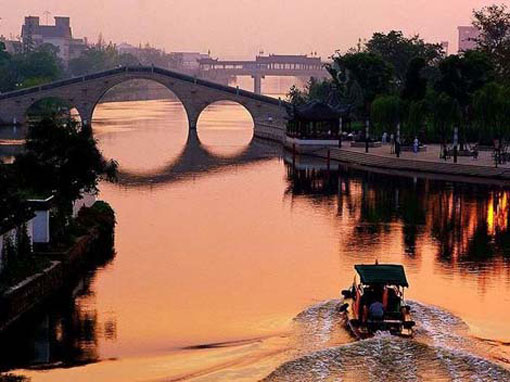
Xitang is a very popular town having history of more than thousand years. It lies in the Jianshan County in the City of Jiaxing of Zhejiang Province. It dates back to the Period of Spring and Autum and the Warring States. This town was the place of strategic importance on the boundary of the Yue and Wu states. It has a flat terrain which is marked by natural and quiet environment with the rivers running through it. You can get the bird eye view of the whole town and blue water sparkling in the every point the eyes reflections and touch of the houses in water. The handsome Bridges, quiet water, and reflections in the rosy sunset and early morning with fishing boats and glistening lights in the evening forms the amazing picture. A full sense of poetry can be observed when the south lower reaches the Yangtze River.

Xitang Water Town

Xitang Water Town

There are many well preserved buildings of the Ming dynasty and Qing Dynasty in this town. They have a very high artistic quality and research value. These are famous for various corridors, bridges and lanes.

The covered corridor is one of the most beautiful scenes of this town. It offers very distinctive features and is historic as compared to other water towns. It has many sections and the whole covered corridor is more than thousand meters long which attracts visitor from all over the world due to its charm. It is tile roofed which is built along the riverside and provides the shelter to the people for avoiding the hot sun and rain. So, you will never be caught in the sun or exposed to the hot sun while visiting this wonderful town. One of the sections of this corridor is very elegant and it has carved decorative patterns which are praised by a large number of tourists due to its artistic perfection. There are high back davenports on the one side of the covered corridor where you can take rest along the river.

Xitang Water Town

Xitang Water Town

« Older posts Newer posts »

© 2025 China Yangtze.com

Theme by Anders NorenUp ↑