China Yangtze.com

China Yangtze River Information: cruises, maps, pictures, ships, three gorges dam.

Page 10 of 72

On-Board Experience of Yangtze Cruise- Part 2

Question: What is the currency used onboard? Is currency exchange service available onboard?

Answer: Generally, no cash transactions are made onboard. Instead, a tally of the expanses is kept for each passenger. Before disembarkation, the passengers are required to pay their bills using major currencies like British Pounds, US dollars, Chinese Yuan, Euro or major credit cards like VISA, MasterCard or American Express. The currency exchange service is available at the reception desk.

Question: Does the cabin have safes?

Answer: Yes, each cabin is fitted with safe.

Question: I have problem while waking for a longer period of time. How can I join the shore excursions?

Answer: There will be many local porters for serving you during your shore excursions. Two of them will carry you in a bamboo chair, for which you are required to pay about CNY20.00 – CNY30.00 (US$2.50 – US$4.00). This will be very convenient as well as helpful for you.

Question: how much I need to pay to the porters when I embark and disembark?

Answer: It depends upon the tour package from where you have booked. But, generally you do not need to pay unless you want to give them tip. You guide generally will pay portage to them.

Question: What about tipping?

Answer: Tipper is the matter of your personal preference. An additional tip to any staff member who has provides some special service is solely upon your discretion. Tips to shore excursion guide are not at the discretion of passengers.

Question: How the passengers with special physical or medical needs are treated?

Answer: If you need some special physical or medical or relevant needs like wheelchair then you should inform in advance while booking your trip and check if these facilities are available or not. For several years, Yangtze cruise companies have improved their facilities so that even a physically challenged person can enjoy his/her trip to the fullest.

On-Board Experience of Yangtze Cruise- Part 1

Question: Will I have the services of your private tour guide while on board?

Question: No, You might not get the private tour guide while on the board. All the onboard activities are arranged by the cruise company. Your private tour guide will not be accompanying you during the cruise. All the activities and shore excursions during the cruise are fully managed by the cruise company and it is subjected to change without prior notice.

Question: Is water onboard safe for drinking?

Answer: The advance water purification and sterilization equipments offer you clean tap water.

Question: Do staffs onboard speak English?

Answer: Yes, each ship has at least one knowledgeable foreign nation cruise director. Apart from it, most of the service staff speaks English as well.

Question: Can I use my shaver or hair dryer on board? What is the voltage on board?

Answer: Many ships will provide you the hair-dryer in your cabin for your convenience. Most of the Yangtze cruise ships have 110V outlet in bathroom and 220v in Cabin.

Question: what are the special diets catered?

Answer: Most of the ship will provide vegetarian, low-carbohydrate, salt-free, Kosher and other diet preferences. However, the request should be made in advance while booking the cruise.

Question: Are medical services available?

Answer: Yes, professional medical services are available on all Yangtze cruise ship and each ship usually has a doctor and health clinic

Question: What is the onboard smoking policy?

Answer: All ships have smoking areas as well as non-smoking areas. Smoking is usually allowed only on the observation deck.

Question: Is there any laundry service onboard?

Answer: Laundry services like washing and ironing are available but the dry cleaning facility is not available.

Question: Is there facility for internet on board?

Answer: Yes, Phone call services and Internet access services are available via the satellite services. Some of the other secretarial services like simultaneous translation, typing, photocopying, personal computers and fax facilities are available in the business centre. However, for using these services, you need to pay some extra amount. You should bring you own cell phone onboard.

lip1[� i_�&�&-gif” o:title=”degree”/> C in July and 10C in January. Spring and autumn is the best season. During the summer, thunderstorms are frequent causing the water level of river to rise. This generally occurs between July and September. The winter is cold and short.


Question: Which is the high season?

Answer: The high season is defined by the companies based on their cuisse line as well as the water level. Generally, April, May, September and October are the high season for cruising.
Question: How can I get to the ship and how early should I arrive there?

Answer: You can get the details of the itinerary like the name of the port and time of departure from the Cruise Company or travel agent. You need to reach few hours before the departure of the ship.

Question: Which kind of clothing should I bring?

Answer: We suggest you to bring jeans, T- Shirts, light jacket and light weight windbreaker if you are going to plan your cruise during autumn and spring. For cooler days, you should carry a light sweater. You should bring cotton T-shirts, shorts, cap/hat, sunglasses and suntan lotion for cruise on summer days. Sweater is a must if you are cruising in winter. You can carry comfortable walking shoes, sneakers, sandals.

There are general two formal nights which include the Captain’s Welcome Cocktail Party and Dinner and the Captain’s Farewell Dinner. So, it is suggested that you should dress up accordingly for such a formal occasion. Coat and tie for gentlemen and gown or formal dress for ladies is recommended.

Question: What if I arrive late?

Answer: You can miss your ship as scheduled due to some unavoidable reasons. You can contact your cruise company in that case and tell them about your situation.


FAQ Before A Yangtze Cruise

Question: What is the average weather like if I plan to go on a cruise on Yangtze River?

Answer: The weather is generally humid, windy having low sunshine. The average temperature is about 30C in July and 10C in January. Spring and autumn is the best season. During the summer, thunderstorms are frequent causing the water level of river to rise. This generally occurs between July and September. The winter is cold and short.

Question: Which is the high season?

Answer: The high season is defined by the companies based on their cuisse line as well as the water level. Generally, April, May, September and October are the high season for cruising.
Question: How can I get to the ship and how early should I arrive there?

Answer: You can get the details of the itinerary like the name of the port and time of departure from the Cruise Company or travel agent. You need to reach few hours before the departure of the ship.

Question: Which kind of clothing should I bring?

Answer: We suggest you to bring jeans, T- Shirts, light jacket and light weight windbreaker if you are going to plan your cruise during autumn and spring. For cooler days, you should carry a light sweater. You should bring cotton T-shirts, shorts, cap/hat, sunglasses and suntan lotion for cruise on summer days. Sweater is a must if you are cruising in winter. You can carry comfortable walking shoes, sneakers, sandals.

There are general two formal nights which include the Captain’s Welcome Cocktail Party and Dinner and the Captain’s Farewell Dinner. So, it is suggested that you should dress up accordingly for such a formal occasion. Coat and tie for gentlemen and gown or formal dress for ladies is recommended.

Question: What if I arrive late?

Answer: You can miss your ship as scheduled due to some unavoidable reasons. You can contact your cruise company in that case and tell them about your situation.


Tips to travel to Shaghai

Tourism is the growing industry in China and makes it not only a prime destination for business but a must see travel stop. Shanghai is the place where you can get the blend of cultures of west and Chinese culture and modern view of China. This is a must visit place if you are going to china.

If you are looking for a low price on travel then you should plan your trip during Low Season which is from December to February. The peak travel season is during the months of May, September and October.

You can get there by any international flight which is available from all major cities of the world. Shanghai has two airports which provide the international flight facility. It takes around 14 hours to visit Shanghai from New York. Each airport is equipped with the facilities like taxis, buses, duty free shops, post offices, bank for currency conversion, business and internet facility, restaurants and bars. It should be noted that the departure tax is paid in Chinese currency only. Children under the age of 12 and the transit passenger which are proceeding within 24 hours are exempted.

Once you are in Shanghai, there are many transport facilities available for you like rail, sea, bus or automobile. Railways are the best means for the transportation throughout China. Trains are much affordable, safe and well maintained.

Tipping is widely accepted and encouraged by the tour guides, car services and hotel staffs. If the tip is not figured into the bill in the restaurant, it is advisable to pay 10 to 15 percent tip.

You can get a variety of option for dining in Shanghai. There are many restaurants, bars, coffee houses in Shanghai. You can taste the traditional foods as well as western foods served by many restaurants in Shanghai.

Shanghai Travel Guide

Hu for short, Shanghai is one of the renowned international metropolises of the world and drawing more and more attention from all over the world. It is situated on the bank of the River Yangtze which serves as the most influential financial, economical, cultural, international trade, science and technology centers of East China. It is a very famous destination for the tourist for sensing the pulsating development of the country of China.

In addition to the modern look and feel of the city, it has also been endowed with the unique glamor. You can find the perfect blend of culture, tradition, modern, western and oriental.  Old Shikumen and New skyscrapers draw the skyline of this city. Chinese and western traditions are intertwined and thus forming the culture of Shanghai and make the visitors stay here very memorable.
You can enjoy the fascinating view of Shanghai through the extensive walkway of the riverfront on the bank of this river especially at the night time. You can easily get boats which frequently depart from Shiliupu Pier to the south of the Bund and this journey takes approximate three hour’s time.

You can see the glistening waters of the river Huangpu and enjoy the incredible view of the historic architectures. You can also enjoy the modern sky scrapers and experience the local people’s life by doing Tai Chi or playing the game Chinese checker at the park. You can also look into the promenade which has an amazing architecture which has the styles ranging from Neo-Renaissance, Classic, French Baroque and Art Nouveau. The history of this place also backs to when the British established their trade and banks houses and also created a European style landscape in that area. During the War of Chinese Civil, financial investors had relocated and now days it has evolved as a Shanghai’s financial district and home for many companies related to finance in last two decades.


Hu for short, Shanghai is one of the renowned international metropolises of the world and drawing more and more attention from all over the world. It is situated on the bank of the River Yangtze which serves as the most influential financial, economical, cultural, international trade, science and technology centers of East China. It is a very famous destination for the tourist for sensing the pulsating development of the country of China.

In addition to the modern look and feel of the city, it has also been endowed with the unique glamor. You can find the perfect blend of culture, tradition, modern, western and oriental.  Old Shikumen and New skyscrapers draw the skyline of this city. Chinese and western traditions are intertwined and thus forming the culture of Shanghai and make the visitors stay here very memorable.
You can enjoy the fascinating view of Shanghai through the extensive walkway of the riverfront on the bank of this river especially at the night time. You can easily get boats which frequently depart from Shiliupu Pier to the south of the Bund and this journey takes approximate three hour’s time.

You can see the glistening waters of the river Huangpu and enjoy the incredible view of the historic architectures. You can also enjoy the modern sky scrapers and experience the local people’s life by doing Tai Chi or playing the game Chinese checker at the park. You can also look into the promenade which has an amazing architecture which has the styles ranging from Neo-Renaissance, Classic, French Baroque and Art Nouveau. The history of this place also backs to when the British established their trade and banks houses and also created a European style landscape in that area. During the War of Chinese Civil, financial investors had relocated and now days it has evolved as a Shanghai’s financial district and home for many companies related to finance in last two decades.


Garden in Shanghai

Yayuan Garden

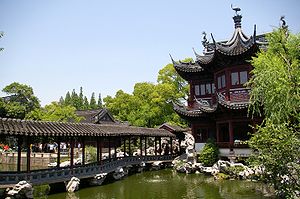
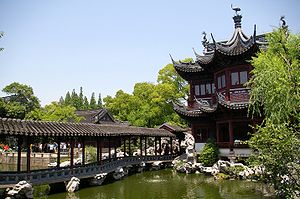
Yayuan is very popular as well as classic garden which is located in Aren Jie area of Shanghai. This garden was completed in the year 1577 by a government officer in the Ming Dynasty. Yu means satisfying and pleasing in china and this garden was made for enjoying the tranquil and happy time. In nearly four hundred year of the existence of Yujuan Garden, it has undergone many types of changes. During the war of opium in 19th century, it was damaged and after that it was restored in the year 1956 and was opened for public in the year 1961.

This garden is extended in area about twenty thousand square meter or about five acres. It has many unique characteristics like rockeries, halls, pavilions, ponds and clusters. You can enjoy main six scenic areas wanhua Chamber, Sansui Hall, Huijing Hall, Inner garden, Dianchun hall, and Yahua Hall. Each of these areas is filled with various scenic spots within their borders.

Yuyan Garden

Yuyan Garden

Yi Garden

Ancient Yi garden is located in the Nanxiang which is nearby the Jiading District of Shanghai. It is located at a distance of about 20 kilometers from the centre of the city. It was built by the Emperor, Jiajing of the Ming Dynasty.

This garden is a wonderful garden among five other classical gardens of Shanghai. Other four gardens are Drunk Pool Garden, Yuyan Garden, Autumn Sightseeing Garden or Qiupu Garden and Zigzag Water Garden. It is divided into four scenic areas which are Yi garden, Flower Fragrance Park, Moonlit Bamboo Park and Crane in Stream pond. Green Bamboos, Ming Style architectures, Tranquil, path with Motifs, and Poem Streams and Couplet Scrolls are its some of the features.
Yi Garden
“Yi” name is derived from the beautiful view of the bamboo. It has been inspired by the poems in books of songs as well as the Odes to Qin which is a kind of musical instrument. Yi also reflects the artistic conception of the green bamboos. The traditional features of this garden are bamboos. In Yi garden Annals, it is recorded that the most beautiful scenery of the garden is the mountain which is covered with the bamboos. Green, graceful and elegant bamboos are present everywhere in the landscape.


Modern Buildings of Shanghai

Oriental Pearl TV Tower

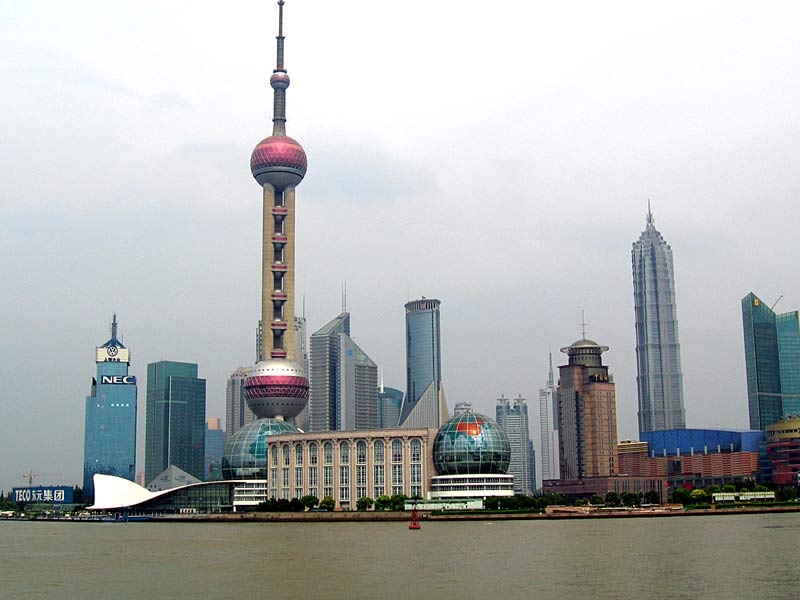
The Tower of oriental Pearl TV is located at Ljuiazui in Shanghai. This tower is surrounded by Nanpu Bridge in the southwest side and Yangpu Bridge in the northeast which creates a picture like the twin dragons playing with pearls. This place has photographic jewels of excitement and imagination which attracts hundreds of tourists every year.

This tower is a mind-blowing ultra modern tower combining the ancient concept of spherical pearls and technology, education, recreation, commerce and conference facilities of this century. The TV and radio tower provides the services in the Shanghai area with total of nine TV channels and ten FM radio channels.

Oriental Pearl TV Tower

Oriental Pearl TV Tower

Jin Mao Tower

The Jin Mao Tower symbolizes the emerging of Shanghai into the 21st century. It is the tallest building of China and the third tallest building in world. It also has the tallest hotel ever build. It has the design of east meeting west and signifies the city of shanghai emerging as a modern global city. Jin Mao follows the paradigm of offer retail and multi-use and shopping at its base and the offices above. The Grand Hyatt is the world’s highest hotel which covers the upper 38 floors.

The Jin Mao Building is a very luxurious complex which combines office space with the shopping mall, commercial space and the entertainment hubs. Three basement levels house service facilities, electric facilities, food court and parking spaces.

Jin Mao Tower

Jin Mao Tower

Disneyland

The opening ceremony for the Shanghai Disneyland was held in the year 2011 and the long-wait for the Disneyland in the biggest city of China was over. This is one of the biggest Sino-foreign joint investments yet in the modern service industry in the country. It is expected to be completed after 5 years.

Shanghai Disneyland is the sixth Disneyland of the world. Orlando Disneyland of Florida is the largest while the Hong Kong Disneyland is the smallest one. It resides I the Chuansha New Town of the Pudong New Area. The first construction period of this Disney Resort covered 390 hectares which includes the core area, 116hectares of Magic Kingdom. The infrastructure and the supporting facilities consist of retail store, theme hotel, parking lot, restaurant, traffic hub, central lake.

Famous Temples of Shanghai

Jian Temple

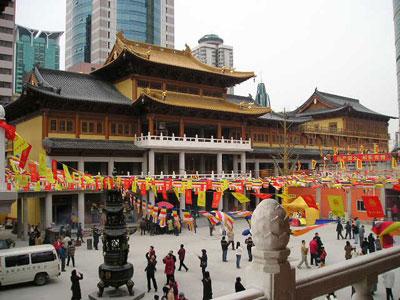
Located at the west of Nanjing Road, Jian Temple is one of the most famous temples of Shanghai. It is at the downtown flourishing area of Shanghai. In the year 1983, it was put on key national protection list.

This temple has more than 780 years of history. It was built in the period of Three Kingdoms and named as the Hudu Chongyan Temple. It was moved to its present location by the Southern Song Dynasty form the bank of the river Wusong. It has been crowded places until the year 1908.d it was first built as the Jing’an Temple and later it was renamed to Jian’ng Temple in the year 1945. It was unfortunately burnt down in the year 1972 but soon reconstructed. In 1990, this temple was opened for the public. You can escape from the bustle and hustle of the crowds in Jing’an Temple. You can also enjoy the marvelous calligraphy and painting by the Yangzhou’s Eight Eccentric painter which is in the exhibition hall of the Buddhist Relics.

Jiang’an Temple

Jiang’an Temple

Confucius Temple

Confucius Temple is located in Wenmiao Road and it is the only ancient architecture which is dedicated to Confucius in the central Shanghai. It was built in the year 1368-1398 for worshipping Confucius who was believed to be a great educator, thinker and founder of Confucianism in China. It has been one of the top learning institutions for several years in shanghai.

Temple of Confucius is one among the four ancient stone carving groups of china and famous as the Treasure house of the Stone Carving Art. It consists of more than 28 ancient buildings which is built with the large number of the stone carvings which includes Dacheng Hall, Xunjing Pagoda and Minlun Hall. Most of the building have been pulled down or destroyed and others are well preserved.

Longhua Temple

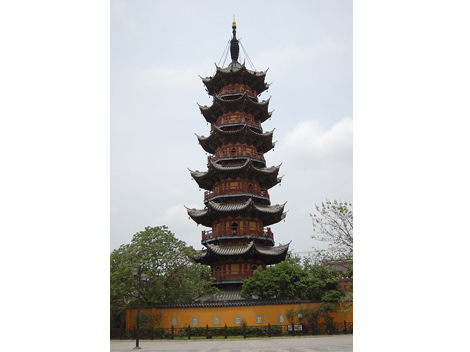
Longhua Temple is the oldest temple in Shanghai for its long history of over 1700 years. Because of the several destructions by the wars, most of the buildings here were reconstructed during the reign of the Emperor Tongzhi and Guangxu in the Qing Dynasty.

Longhua Temple

Longhua Temple

Besides its long history, Longhua Temple is the largest temple in Shanghai. It occupies an area of over 20,000 square meters (five acres) and the architectural proportion is about 5,000 square meters (one point two acres). Along the 194 meters long (637 feet) axis are the Maitreya Hall (Miledian), Devajara Hall (Tianwangdian), Mahavira Hall (Daxiongbaodian), Three Sages Hall (Sanshengdian), Abbot’s Hall (Fangzhangshi) and the Sutras Keeping Hall (Cangjinglou) which keeps the three treasures of the temple including the Dazang sutras, the gold seals and the Buddhist statues. Accessory halls on the two sides are the Bell Tower and the Drum Tower, both of them are furnished with the same hexagonal windows and the curved eaves. The whole courtyard was built strictly in the style of traditional Buddhist symmetry and it’s in accordance with the Chinese concept of beauty.


Shanghai Weather

The weather of shanghai is generally moist and mild with four distinct seasons – a hot rainy summer, a pleasant warm spring, an overcast cold winter and comfortable cool autumn. The location of region at the estuary of Yangtze River to the East China Sea making it so wet that it rains for one third of the year.

The hottest time here is in July and August with the temperature above 35 C or 95F. The coldest time is from late January to February. The spring season is from March to May and it is the most descent time to visit to this city.

With the subtropical maritime monsoon climate, this city is generally moist and mild. Although it is situated on the southern part of China, Shanghai experiences four different seasons throughout the year. The cool autumn and warm spring are very much comfortable for travel while the hot rainy summer as well as overcast cold winter is not suitable time for visiting there.

Spring in the Shanghai starts in March and continues till May. This is the best season of the year for travelling. The flowers that bloom in the spring time make the city attractive and lively. The temperature at this time is around 20C. Light rains however occur sometimes, but it will not disturb your trip. Thin sweaters, long-sleeved shirts or coats are very much suitable for this time.

Summer is long here and starts from June and ends in September. The temperature is very high with abundant rainfall. The highest temperature can be noticed in July or August. For about 10 days, the temperature is above 35C. You should avoid visiting at this time of the year.

There is Meiyu Season or Plum Rain Season form mid June to early July. This lasts for about a month which commences from early summer when the plums begin to ripe along the lower and middle reaches of the Yangtze River. During this time, the rainfall is about 25 percent of the total rainfall of the year.

Autumn is good season for travelling and it comes in October and November. Winter here comes in December to February. The coldest period is during the end of January to early February, during the Chinese Spring festival.

Shanghai Travel Tips

Visa

From the year 2013, the passport holders of the following 45 regions and countries can be granted a visa free stay up to 72 hours while in transit via the Pudong International Airport (PVG) and Hongqiao International Airport.

Argentina, Austria, Australia, Belgium, Brazil, Brunei, Bulgaria, Canada, Chile, Cyprus, Czech Republic, Denmark, Estonia, Finland, France, Germany, Greece, Hungary, Iceland, Ireland, Italy, Japan, Latvia, Lithuania, Luxembourg, Malta, Mexico, Netherlands, New Zealand, Poland, Portugal, Qatar, Romania, Russia, Singapore, Slovakia, Slovenia, South Korea, Spain, Sweden, Switzerland, United Arab Emirates, Ukraine, United Kingdom, United States.

The visitors from other countries have to obtain a visa before entering to this city. You can easily apply for the visa in the Consulate of P. R. China of your country or you can contact your travel agency for arranging your tourist visa. Special fast applications are generally completed within the timeframe of 24 hours.

Health and Hygiene

Before the entry and departure, you need to fill the Health Declaration Card. You are also required to accept the body temperature scanning upon the entry.

Currency and Banks

Currency used in the mainland China is RMB or Ren Min Bi namely CNY and same in Shanghai. The Shanghai Branch of Bank of China is located in Zhongyin Building in the Yincheng Middle Road, Pudong New District. Many other sub-branches are also there where you can avail the facility of foreign exchange. These banks are generally open from Monday to Saturday and the office hours is from 9:00 to 17:00 hrs.

Some of the useful numbers are

Fire: 119
Police: 110
Ambulance: 120
Consumer Complaint: 12315
Tourists Complaint: 64393615
Telephone Trouble: 122
Local Telephone Number and Long-distance City Code Inquiry: 114
International City Code Inquiry: 116
Weather Forecast: 121, 221
Zip Code Inquiry: 184
Customer Service Center of Post Office: 185
Train Ticket Reservation: 63171880, 8008207890
Coach Ticket Reservation: 56630230
Hongqiao International Airport Consultation: 62688918
Pudong International Airport Consultation: 38484500


« Older posts Newer posts »

© 2025 China Yangtze.com

Theme by Anders NorenUp ↑