If there’s one place in China that has captured my heart, it’s definitely Chengdu, the capital of Sichuan Province. Famous for its vibrant food scene, rich culture, and laid-back lifestyle, Chengdu offers a perfect blend of history and modernity. Whether you’re planning your first trip to China or you’ve already explored other cities, Chengdu promises an unforgettable experience.
First Impressions of Chengdu | Sunshine and Friendly Locals
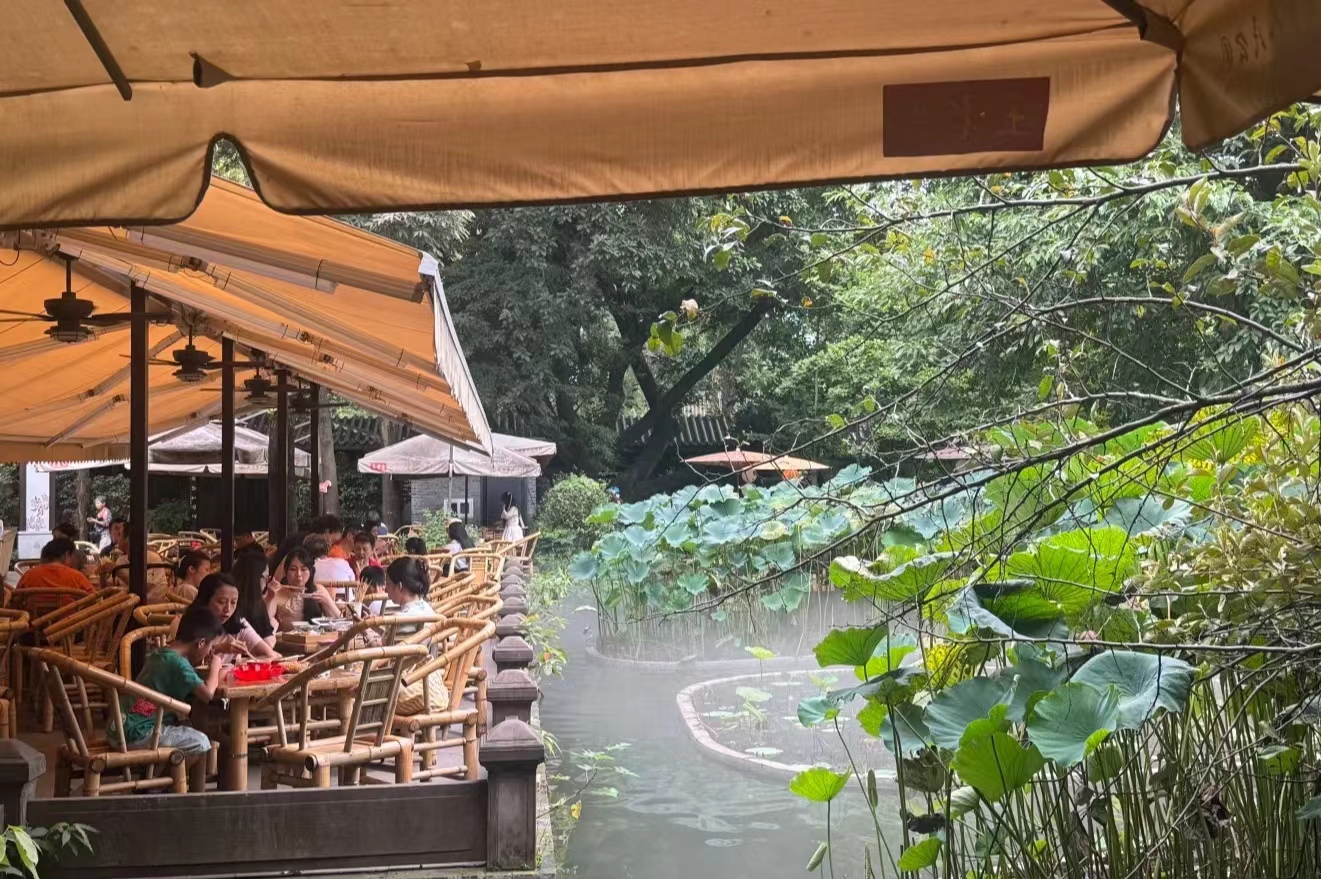
Unlike the hustle and bustle of many big cities, Chengdu has a relaxed pace that immediately puts you at ease. Strolling through the wide and narrow alleys (Kuan Zhai Xiang Zi) in the city center, I couldn’t help but slow down and soak in the atmosphere. The cobblestone streets, ancient courtyard houses, and tea shops on every corner gave me a sense of stepping back in time to old Chengdu. Local residents and visitors alike gathered in cozy tea houses, sipping traditional “Gaiwan” tea, watching Sichuan opera, and chatting with friends. The slower pace of life here creates a warm and inviting vibe.
The locals are incredibly friendly, often speaking simple English or using gestures and expressions to help visitors. Don’t hesitate to ask for directions or recommendations—people are more than happy to assist you.
A Culinary Journey Through Chengdu | A Feast for the Senses
Chengdu is nothing short of a food lover’s paradise. When I first arrived, I thought Sichuan hotpot was just about the spice—how wrong I was! The food here offers far more than just heat; it’s an explosion of flavors that will leave your taste buds dancing.
Sichuan Hotpot: A Spicy Adventure
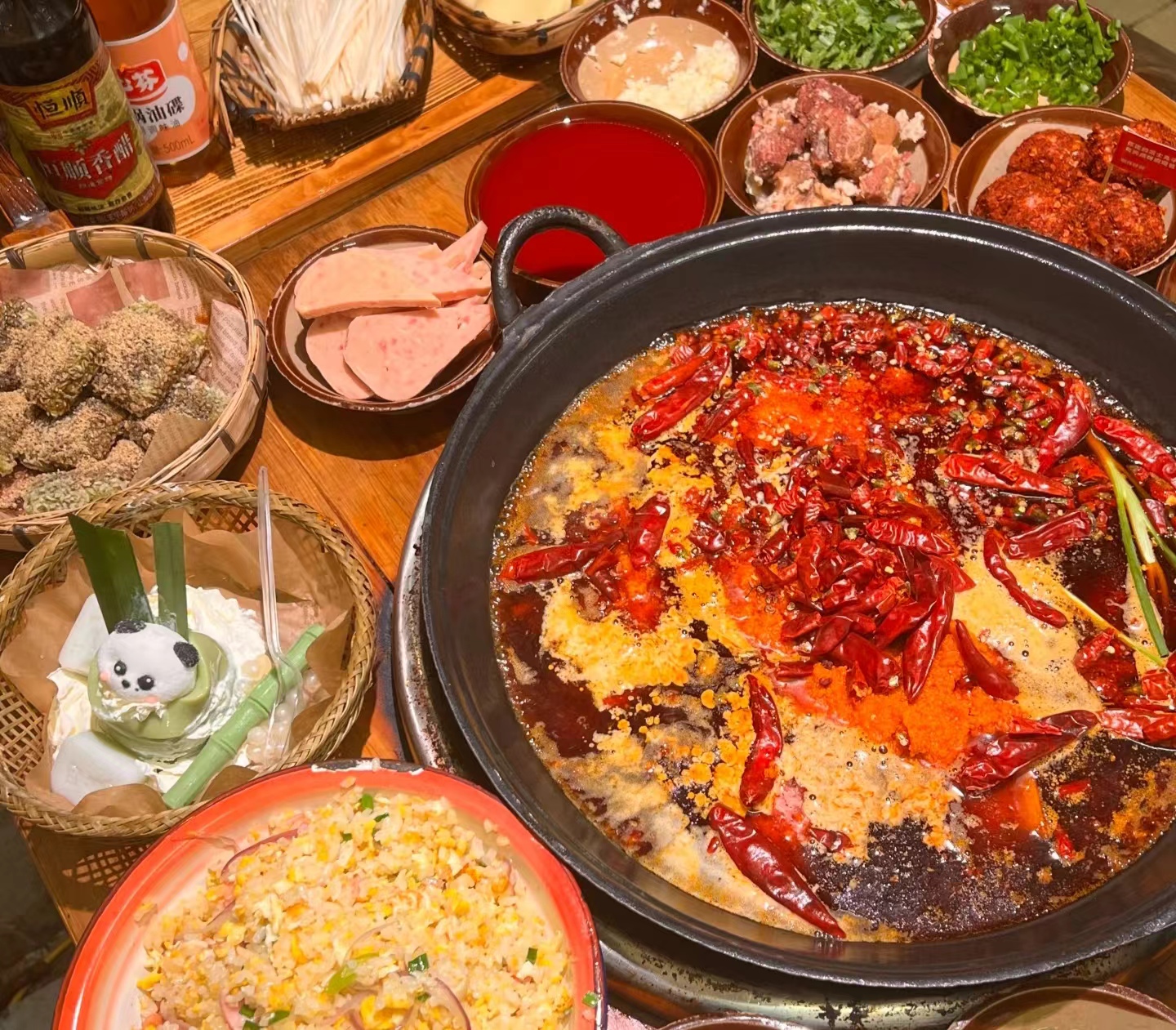
On my first hotpot experience at a local restaurant on Jinli Ancient Street, the first thing that arrived was a steaming pot of broth made from a mix of spices and medicinal herbs. The aroma hit me instantly. It wasn’t just spicy, it was a complex blend of numbing, fragrant, and savory flavors—what locals call “Málàxiānxiāng” (麻辣鲜香). Once you taste it, you’ll understand why people can’t get enough of it.
Tip: If you can handle the spice, a must-try is the Yuan Yang Hotpot—a divided pot with both spicy and mild broths, perfect for satisfying different tastes.
Street Snacks: Sichuan Flavor on the Go
Chengdu’s street food is also a major highlight.
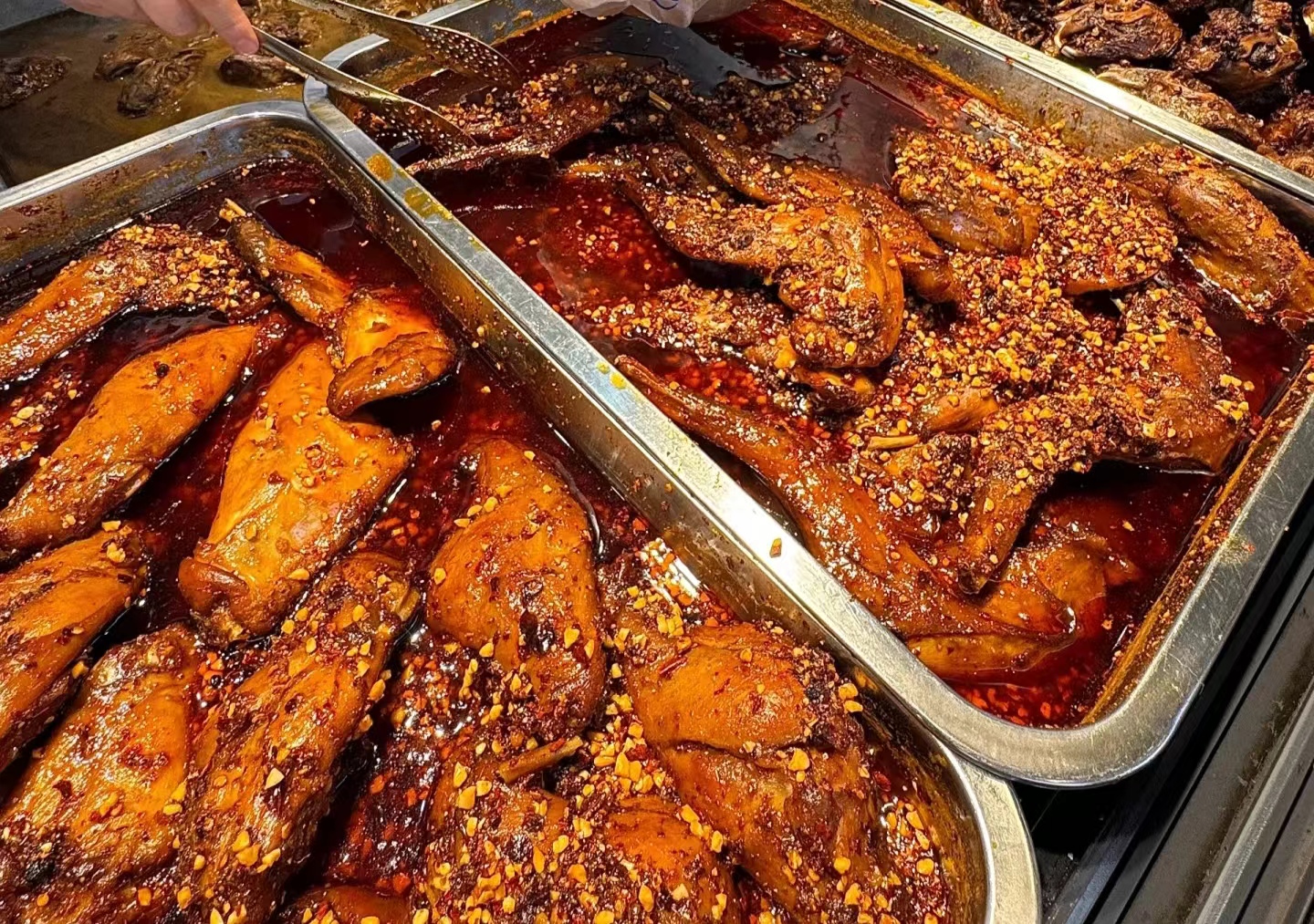
Grilled rabbit heads and legs, stinky tofu and sugar-coated fruit, each bite brings you closer to the heart of Sichuan flavors.
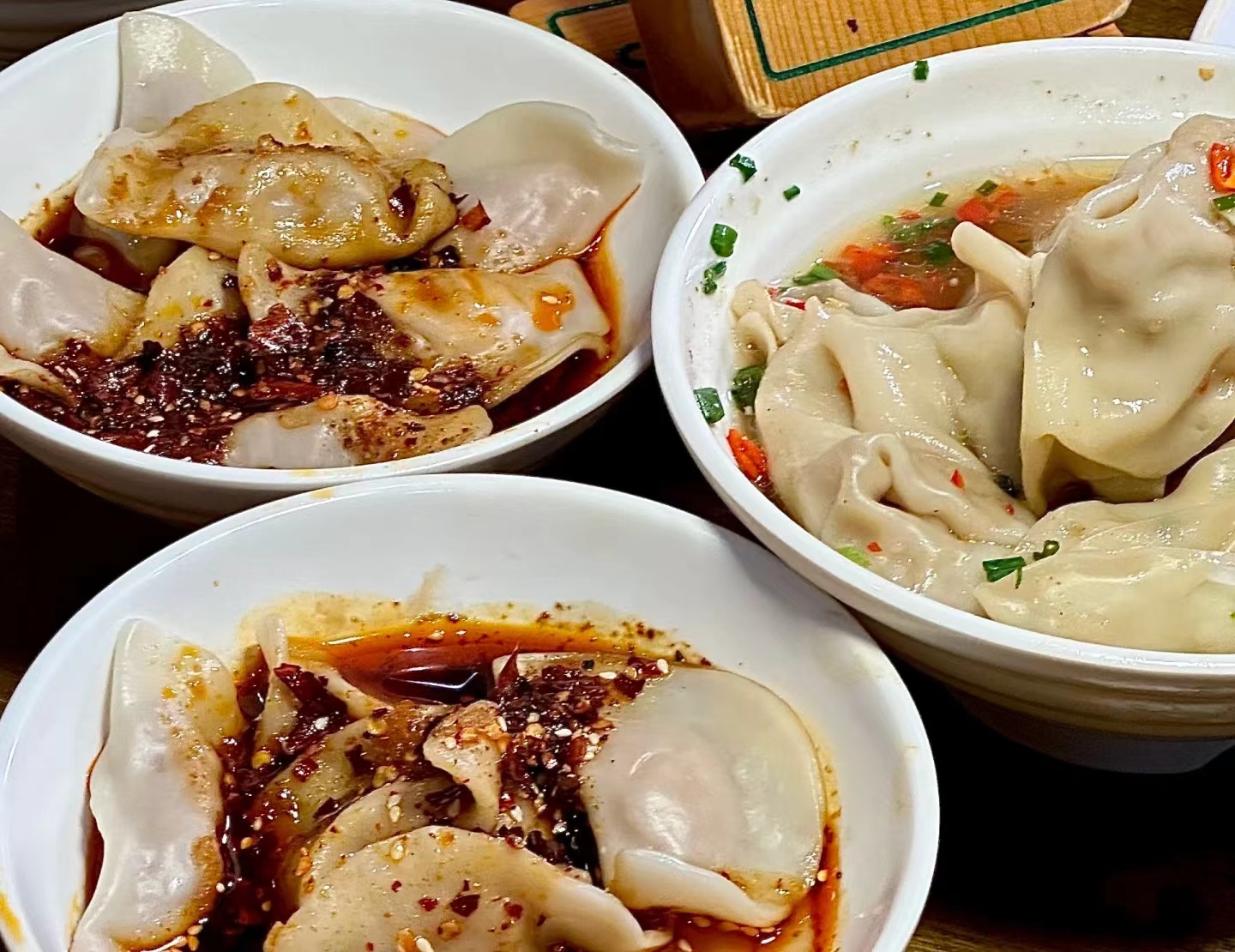
Zhong Shui Jiao (钟水饺) – These aren’t your average dumplings. Filled with spicy and flavorful Sichuan seasoning, each bite is packed with punch.
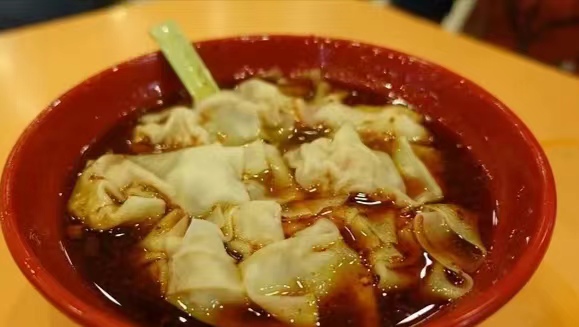
Long Chao Shou (龙抄手) – A local favorite, these thin-skinned dumplings are filled with savory stuffing and drenched in a spicy red oil soup. It’s the kind of dish you can’t stop eating once you start
For dessert, try Bingfen (冰粉), a cool, refreshing traditional treat made with jelly-like powder and topped with brown sugar, peanuts, and sesame.
Cultural Exploration in Chengdu | History and Heritage
Beyond its food scene, Chengdu boasts a rich cultural heritage. As one of China’s ancient capitals, it’s home to fascinating historical sites and cultural landmarks.
Wuhou Shrine: A Trip Back to the Three Kingdoms
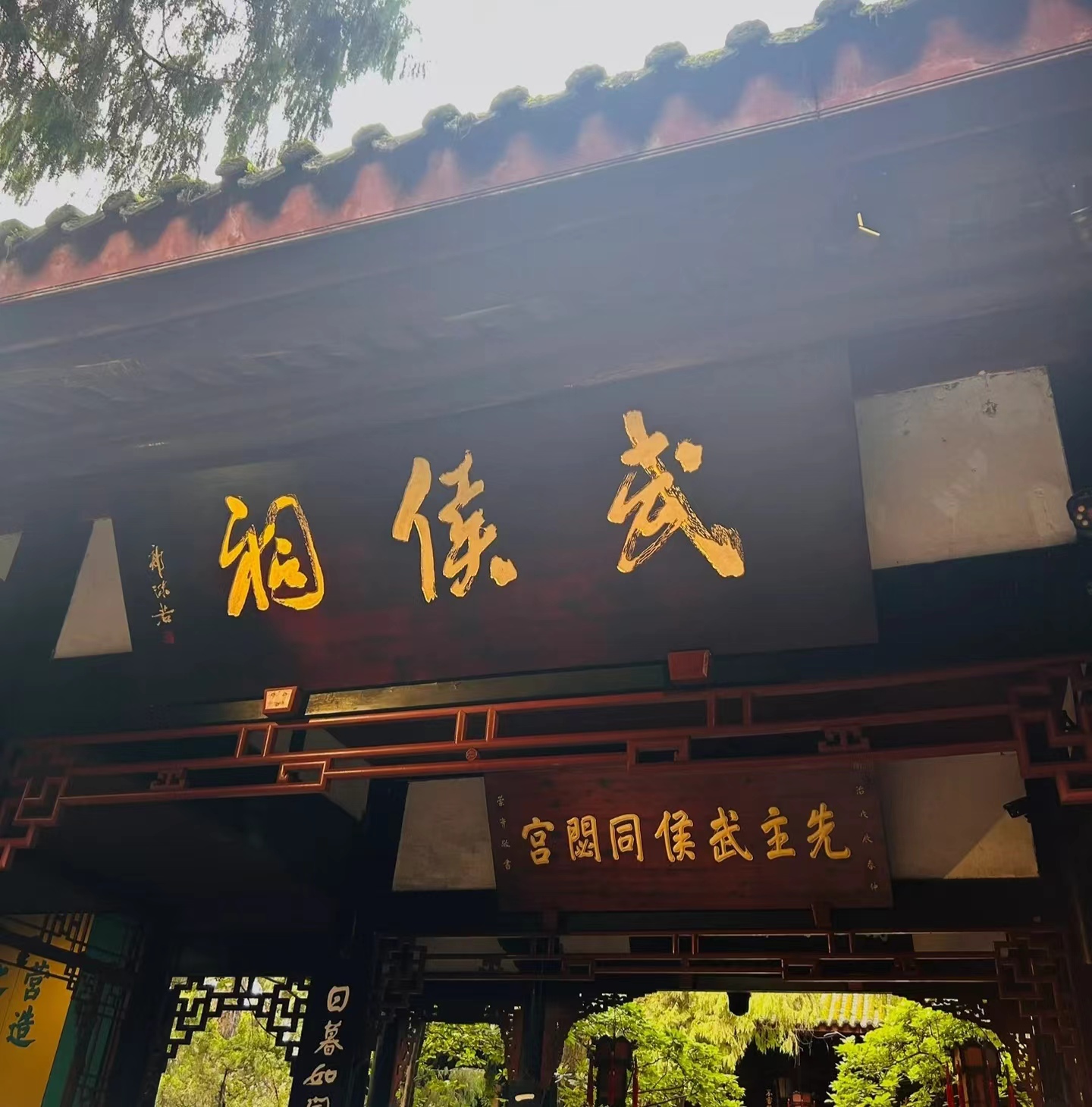
A visit to the Wuhou Shrine is a must for history enthusiasts. Dedicated to Zhuge Liang, the famed strategist from the Three Kingdoms period, this temple provides a glimpse into one of China’s most famous historical figures. It’s filled with relics and sculptures that narrate the story of Zhuge Liang’s wisdom and sacrifices.
Chengdu Giant Panda Base: A Heartwarming Encounter
If you’re a nature lover or animal enthusiast, Chengdu Giant Panda Base is an absolute must-see. Watching these adorable creatures munch on bamboo is enough to melt anyone’s heart. Early mornings are the best time to visit, as the pandas are most active during this time, stretching, climbing, and playfully interacting with one another.
Qingcheng Mountain: Embrace Nature and Tranquility
For a more peaceful escape, head to Qingcheng Mountain, one of the birthplaces of Taoism. Surrounded by lush greenery and misty clouds, it’s an ideal place for a short hike. Along the way, you’ll pass ancient Taoist temples and enjoy panoramic views of the surrounding landscape—a perfect way to connect with nature and unwind.
Travel Tips | Making the Most of Your Chengdu Trip
Getting Around: Getting around Chengdu is easy and convenient. The city has an efficient metro system, plenty of taxis, and shared bikes. For a more local experience, you can ride a rickshaw or electric scooter to explore the streets at a relaxed pace.
Safety and Etiquette: Chengdu is relatively safe, with excellent public security and management. You’ll find that most restaurants and shops cater to foreigners, with English signage in many places. People are helpful, so don’t hesitate to ask if you need assistance.
If you’re looking for a destination that offers rich cultural heritage, mouthwatering food, and natural beauty, Chengdu is the place to be. With its iconic Sichuan hotpot, charming tea houses, welcoming locals, ancient temples, and giant pandas, it offers something for everyone. Whether you’re traveling solo, with friends, or with family, Chengdu promises a travel experience unlike any other.
The city of Chengdu lies on the Chengdu Plain on the west-central edge of the Sichuan Basin, itself a deep, almost rectangular depression located on the eastern edge of the Qinghai-Tibet Plateau. Sichuan Province is characterized to the west and north by the towering Hengduan Mountains – an area that is ruggedly beautiful (bamboo forests abound), and is predominantly populated by people of Tibetan origin (many of the residents of Chengdu are also of Tibetan origin) – and to the east by the lowland area of the Sichuan Basin.
Not only are the Hengduan Mountains tall, they are also situated on an elevated crustal uplift that is the geological opposite of a depression, such as the Sichuan Basin. The weather in the mountainous region is icy cold, but clear, which contrasts almost diametrically with the neighboring mild, humid – and often overcast or outright foggy – weather of the Chengdu Plain to the east that characterizes the city of Chengdu, sometimes likened to the city of London as regards the fog and the drizzly weather. For example, Chengdu gets about 250-300 foggy, cloudy or rainy days each year.
The average winter temperature (January is the coldest month) lies between 3-8 degrees Celsius, while the average summer temperature (July being the coldest month) lies between 25-29 degrees Celsius. Average precipitation (strictly rainfall) for the Chengdu Plain is 1000 mm (about 40 in), which is almost double the amount of precipitation in the Hengduan Mountains to the west.
A summary of the weather of Chengdu might read ‘an early spring, a hot summer, a cool autumn and a warm [relatively speaking] winter’. Another old saying that describes the weather of Chengdu pokes fun at the infrequency of sunshine: ‘Shu [“Chengdu”] dogs bark at the sight of the sun’.
Any presentation of the dishes served in the private homes and public restaurants of Chengdu would be remiss if it did not point out that the dishes served in Chengdu, both in private homes and in restaurants, belong to the Sichuan Cuisine tradition, one of the Eight Major Cuisine Schools in China.
In the following, a brief description of the defining features of Sichuan Cuisine, also known as Chuan Cuisine, will be presented, followed by a list of the most popular&famous Sichuan dishes. Finally, a short, very in-exhaustive (you are herewith encouraged to find your own favorite Chengdu eatery) list of restaurants in Chengdu is presented.
Chuan Cuisine In Brief
Chuan Cuisine is the most popular cuisine in China, defined in terms of the breadth and depth of where it is served. Of course it helps the depth parameter that the neighboring population-dense municipality of Chongqing, formerly a part of Sichuan Province, is one of the areas outside present-day Sichuan Province most enamored of Chuan Cuisine.
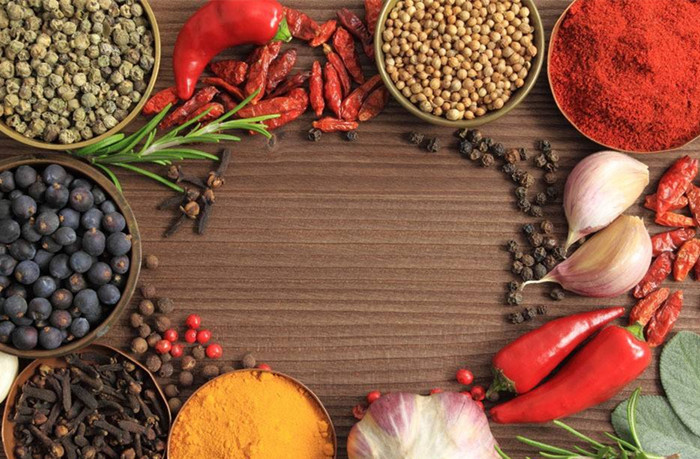
The dishes of Chuan Cuisine are famous for spicy-hot flavors, a spicy-hotness that Sichuaners call “dry hot”, insisting that it differs from the “wet hot” spiciness of other cuisines. The difference, say, Sichuaners, is that the spices used to achieve “dry hot” spiciness consists of a mixture of dry ingredients such as crushed peppercorns (black, red and white) and dried, crushed chili, as well as Sichuan Province’s own native pepper, huajiao (“flower pepper” from the prickly ash tree, Zanthoxylum bungeanum) that is of course first dried, then crushed. According to Sichuan-Cuisine chefs, gourmets and gourmands (which covers just about everyone cooking and eating Sichuan Cuisine : ) ), the salient features of “dry hot” spiciness consist of an instantaneous numbing effect on the tongue, and a pleasing, lingering, spicy-hot aftertaste.
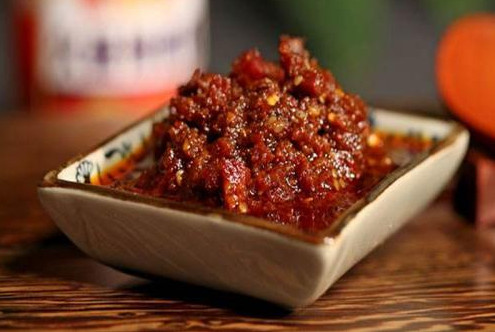
Chuan Cuisine is also famous for its bold tastes in general, which all seem to come together in one of the most famous dishes of Sichuan Province and the municipality of Chongqing: Hot Pot. Some of the most common ingredients that contribute to the bold tastes of Chuan Cuisine are: bell peppers, garlic, hot-pickled cucumbers spiked with mustard from Fuling, fermented soybeans from Tongchuan, green beans, peanuts, scallions, broad-bean sauce from Pixian, Chongqing chili sauce, soy sauce from Zhongba, two special vinegars (cooking vinegar from Baoning and salad vinegar from Sanhui) and Sichuan’s own special sea salt from wells in Zigong.
And this is only the beginning, as any Sichuaner will tell you, thanks to its remarkable climate, Sichuan Province is blessed with a record number of naturally occurring plants used in the preparation of food (and of so-called Medicinal Foods), including some of the best and tastiest varieties of mushrooms in all of China (regarding of mushrooms, the Sichuan province is to China as the department of Dordogne – famous for, among other mushrooms, its truffles – is to France).
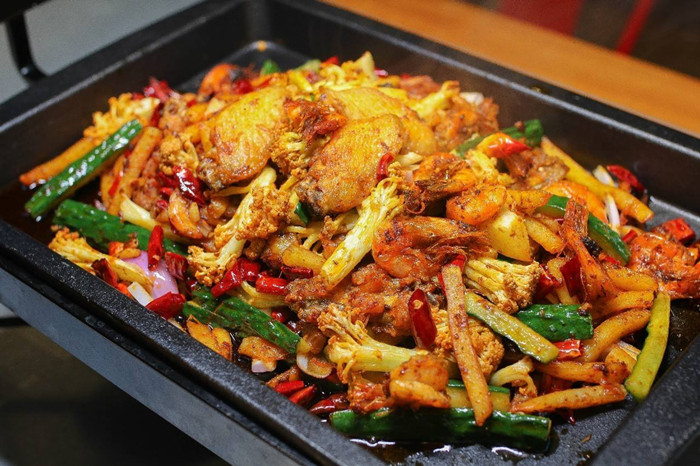
Chuan Cuisine excels in quick-frying and stir-frying methods, as well as two special cooking methods particular to Chuan Cuisine: dry-braising and dry-stewing. Dry-braising, as the name suggests, involves driving out liquids from the diced meat and vegetable mixture using a hot, thick iron pot with a bare minimum of oil in order to prevent sticking. Once the liquids are driven out and cooked off/ sufficiently reduced, the spices and any additional oil are then added. This results in tender, juicy morsels of meat and crispy vegetables.
Dry-stewing is a method for making sauces derived from soups and broths (drying these out, as it were), to which other, thicker, prepared sauces are added. The soup or broth is reduced slowly over low heat to the desired consistency, then a thick, flavored sauce such as Pixian broad-bean sauce or Chongqing chili sauce is added. Since the soup or broth is often made with the use of fat-marbled meat (or bones with fat-marbled meat) for flavor, the reduction process results in a slightly oilier sauce than comparable sauces made with milk or corn starch, which is partly what gives this sauce its delicious taste.
There is a saying about Sichuan Cuisine that Chuan Cuisine chefs all over China, especially the chefs of Chengdu and Chongqing, take great pride in: only Chuan Cuisine can produce ‘one hundred dishes, each with one flavor, and one dish with all one hundred flavors’.
Below is a representative selection of Sichuan dishes. Note that freshwater fish and crustacea are popular in the province, and, something that might seem odd to a Western palate – fish flavors and sauces are used in conjunction with meat dishes involving pork and beef, etc.
Special Chuan Cuisine Dishes
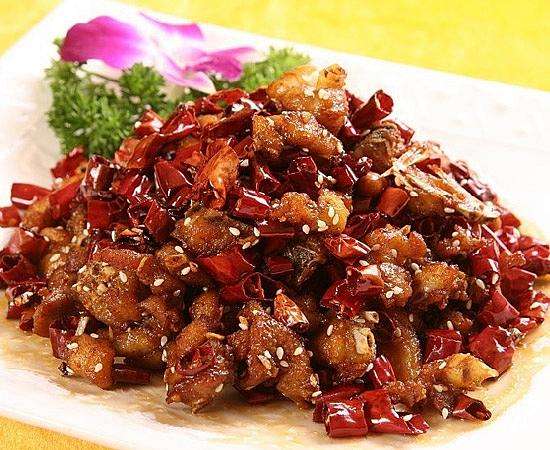
Stir-Fried Spicy Diced Chicken
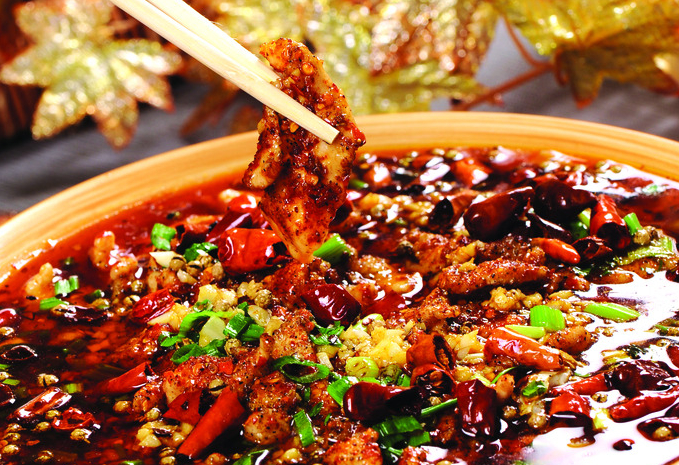
Spicy Diced Chicken is cooked by stir-frying a mixture of diced chicken together with dried, crushed chili pepper and golden peanuts. Spicy Diced Chicken, and the dish below, Mapo Bean Curd, are as popular among Westerners as among the Chinese in general, and among the residents of Chengdu and Chongqing in particular. Bon appetit!
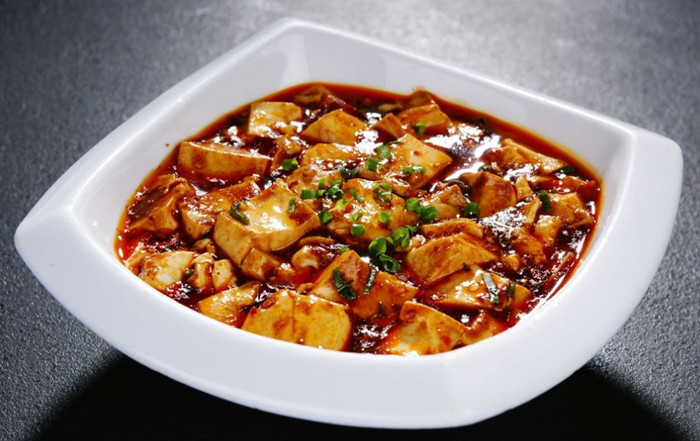
Mapo Bean Curd
Mapo Bean Curd is bean curd, or tofu, set in a tasty bean-and-chili based sauce, which serves as a thin, somewhat oily, bright red suspension. The dish is often topped with minced meat – usually pork or beef. Seasonings include water chestnuts, onions, mushrooms – such as the Judas ear (Auricularia auricula-judae) – and other vegetables. Mapo Bean Curd is often described with some or all of the following adjectives: numbing, spicy-hot, fresh and flaky, soft and tender, and aromatic. Mapo Bean Curd is as popular in London, Paris and New York – and, of course, in Amsterdam – as it is inside China. Bon appetit!
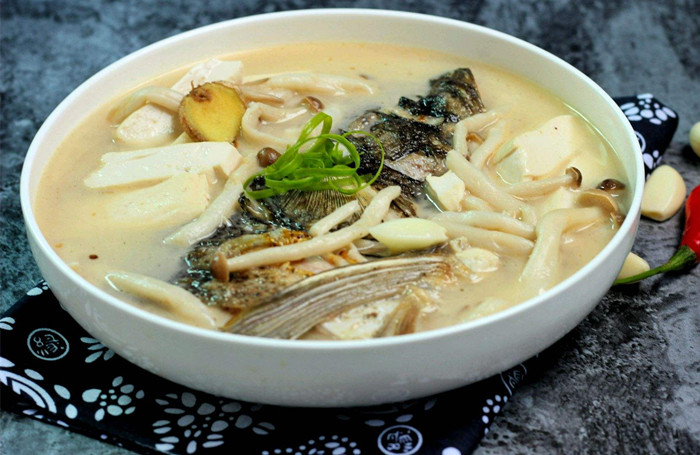
Fish Head in Bean Curd Soup
The fish heads are cooked in enough water to just cover them. When the fish heads are almost done, suitable amounts (depending on the number of fish heads) of scallions, grated ginger, garlic, salt & pepper, bean-and-chili sauce, and cooking wine are added. When the fish heads are cooked done, either an appropriate amount of gelatinous thickener such as mung bean sheet jelly, or corn starch, is added. The finished soup is topped with a bit of fresh green spices such as chives, parsley, etc., for added color. Bon appetit!
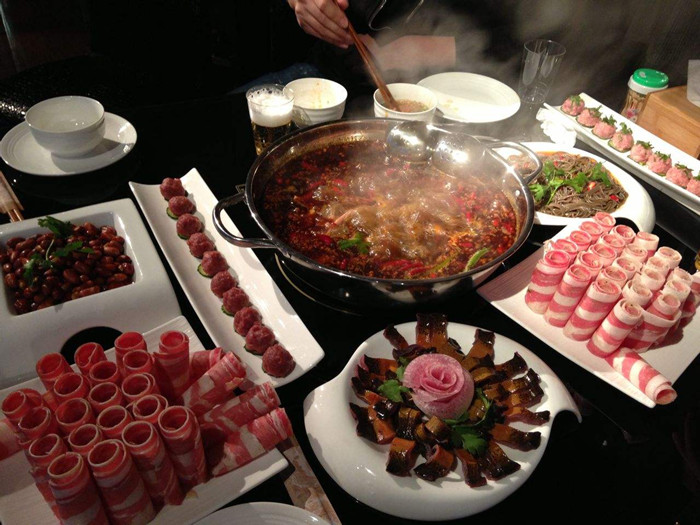
Sichuan Hot Pot
Sichuan Hot Pot, like most of the cuisine consumed in the humid province of Sichuan, is very spicy (note that, as implied here, spicy food is considered an antidote to humidity and resulting sweatiness, in keeping with the precepts of Chinese Traditional Medicine – elsewhere referred to as Traditional Chinese Medicine, or TCM, which acronym Westerners generally associate with Turner Classic Movies, which should never be ingested!(: ) – as it helps in eliminating sweat). The broth is flavored with dried, crushed chili peppers and with other pungent herbs and spices. The main ingredients of the cooking broth include chili pepper, Chinese crystal sugar and wine. Diced or sliced pieces of pork – including the kidney – chicken breast, beef tripe, goose intestines, spring onions, soy bean sprouts, mushrooms, duck and sea cucumber are the usual meats used in the dish. Bon appetit!
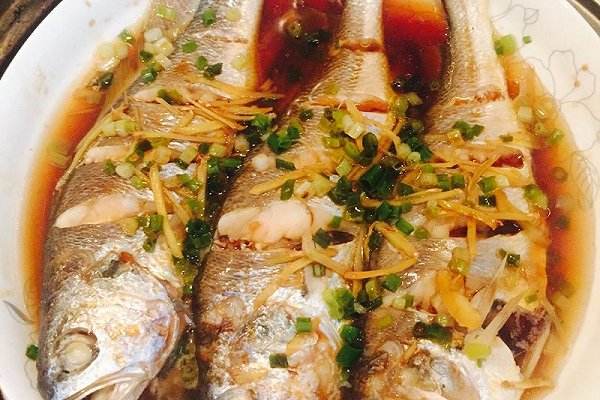
Steamed Yellow Croaker
An appropriate number of Large (“Large” is part of the name, not a reference to size) Yellow Croaker (Pseudosciaena crocea) – not to be confused with the Yellowfin Croaker (Umbrina roncador), a saltwater fish that frequents bays and estuaries – are scored with diagonal slits on either side and covered with cooking wine, to which are added salt and pepper, scallions and ginger. The mixture is then brought to a boil and the heat reduced to low, then cooked for ½ hour (this recipe is intended for Yellow Croaker weighing about ½ kilo (1.1 lb) per fish, so if you use a different, larger fish, such as the increasingly popular Tilapia – now an important aquaculture fish available just about everywhere in the world, including in China – you will need to adjust the cooking time accordingly).
When the fish is done, remove, drip-dry for a moment (alternatively, place momentarily on a paper towel), then transfer to a pre-heated serving platter. Quickly stir-fry pork, chili, scallion, and ginger strips in oil in a hot wok for a few minutes, then add thinly-sliced mushrooms (any type of firm mushroom), winter bamboo shoots and shredded, pickled (in vinegar spiked with chili) vegetable mustard (aka root mustard, Brassica juncea, not to be confused with ordinary seed mustard). Add a dash each of soy sauce and cooking wine, mix lightly as the alcohol content of the wine evaporates, then pour over the fish. Serve immediately. Bon appetit!
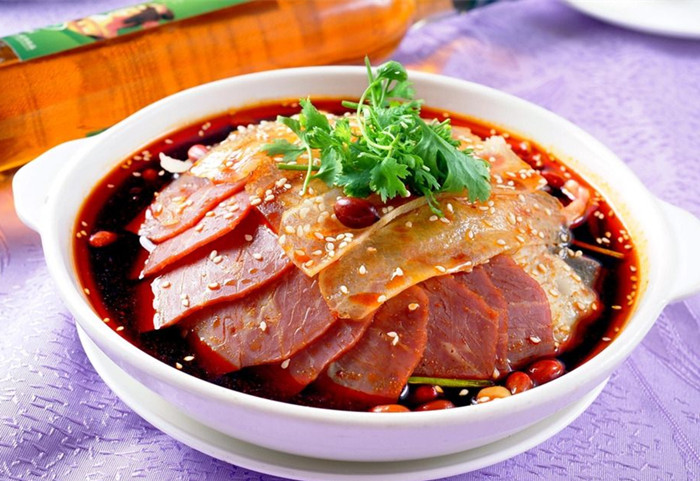
Fuqi Fei Pian
Fuqi Fei Pian is made of thinly sliced beef, cow’s lung or beef tongue seasoned with frying oil that is spiked with chili. There is a homely story about the origin of this famous Sichuan dish that goes as follows. Guo Zhaohua, the inventor of this dish, and his wife sold their marinated (in Baoning vinegar) meat slices from a small vending cart that they would push from street to street. The couple’s marinated meat slices were so delicious – and the aroma of them so enticing – that no one could resist them. The marinated meat slices of Guo Zhaohua and his wife became so popular that people gave the dish a fitting name meant to represent all of the marinated meats served by the couple, irrespective of whether it was beef tongue, beef slices or cow’s lung: Husband and Wife Lung Slices. Bon appetit!
A SHORT SELECTION OF RESTAURANTS IN CHENGDU
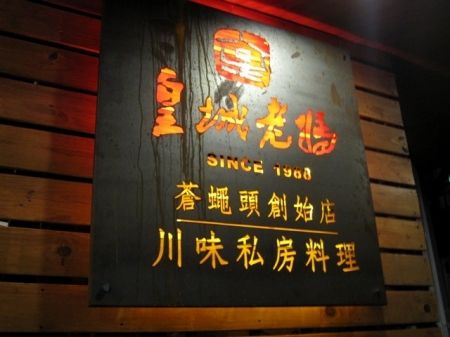
Imperial City Old Ma Restaurant (Huangcheng Laoma)
Imperial City Old Ma Restaurant is a large upmarket restaurant chain with outlets throughout China. The chain, which originated in Chengdu, used to have two Hot Pot restaurants in Chengdu, one named Imperial City Old Ma, the other named simply Old Ma. The Old Ma restaurant eventually declined, then disappeared, while the Imperial City Old Ma restaurant just got bigger and better.
Address: No. 14 Shenlong Street, Chengdu, China
Tel: (028) 8523-1777
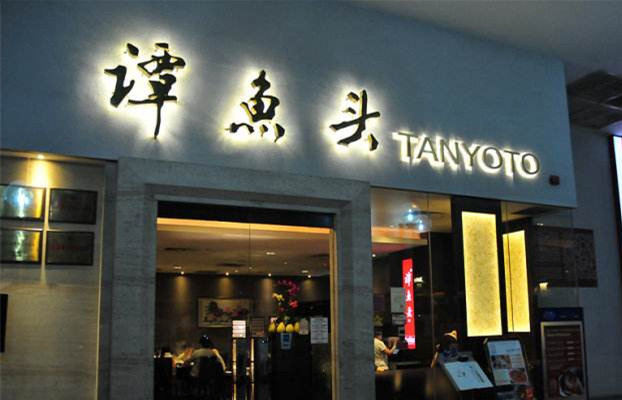
Tan’s Fish Head Restaurant
The restaurant was originally named after the inventor’s name, Tan Changan. The restaurant eventually became well-known for its delicious fish head Hot Pot, after which the restaurant was accordingly renamed Tan’s Fish Head Restaurant.
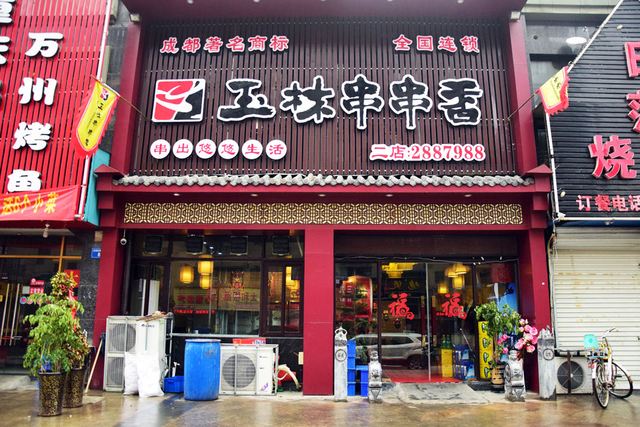
Yulin Chuanchuan Xiang Restaurant
Yulin Chuanchuan Xiang Restaurant got its name from the fact that Chuanchuan Xiang, also called Ma La Tang, is the most favorite food among the women of Chengdu. It can be as expensive or as inexpensive as one desires. Chuanchuan Xiang is simply a form of Hot Pot whereby the food items to be cooked – anything from pieces of vegetables to meat to poultry to prawns to you-name-it – are threaded onto the end of a bamboo skewer, then the “business end” of the skewer is lowered into the Hot Pot.
Think of it as a sort of fast-food version of Hot Pot, where, instead of necessarily sitting at a table and dining on a large quantity of food over a long period of time, one can purchase, for a fixed price, a given skewer of Chuanchuan Xiang (vegetables only skewers, meats (or poultry or seafood) only skewers, or mixed skewers). Chuanchuan Xiang can be bought at street stands everywhere, and also in traditional sit-down restaurants like Yulin Chuanchuan Xiang Restaurant, the most popular traditional restaurant in Chengdu serving Chuanchuan Xiang.